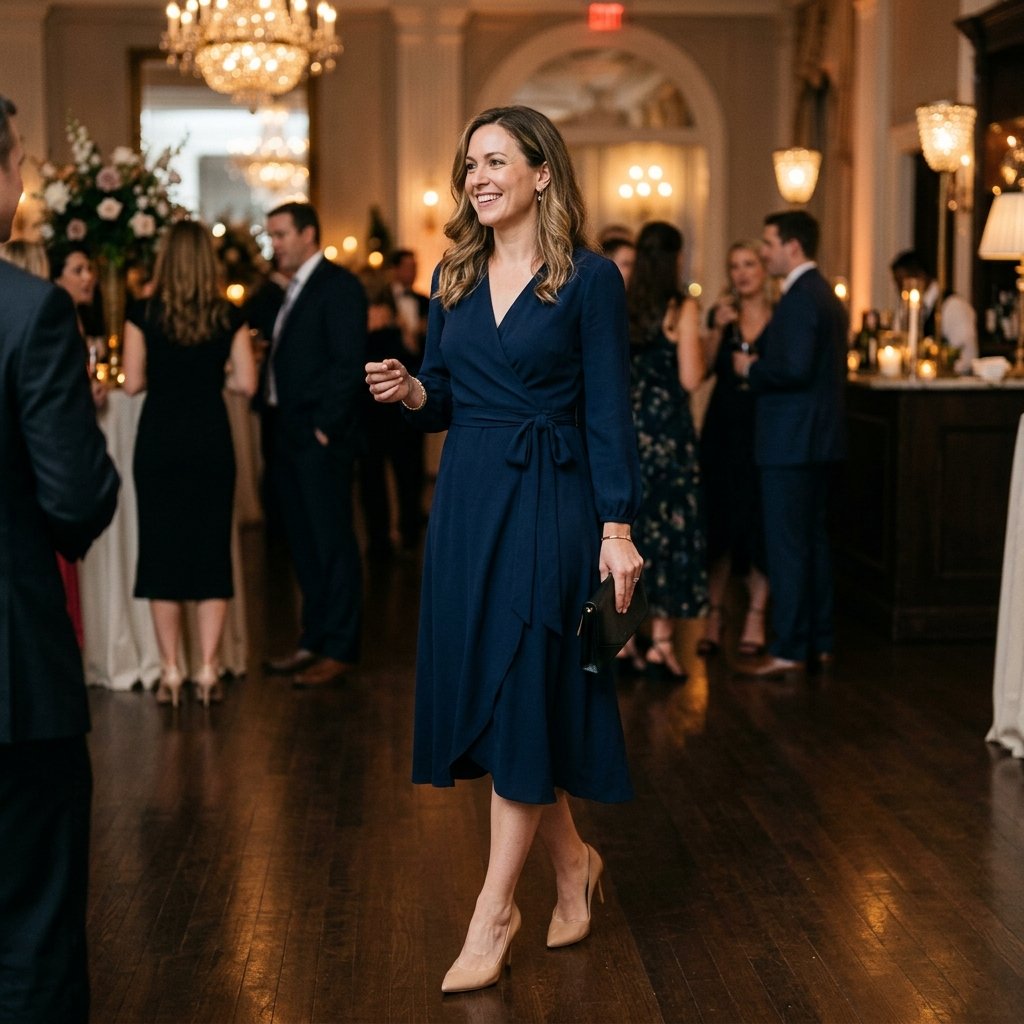
I bought my first midi cocktail dress for a work gala a few years ago and got it completely wrong.
Actually, I got it wrong twice.
The first dress landed at the widest part of my calves and somehow made me look shorter than I am. The second fit awkwardly through the bust and waist at the same time. It wasn’t until the third dress, a navy wrap midi in crepe, that I understood why some women seem to rely on the same dress for years while others keep shopping for replacements.
The truth is that most women don’t struggle because midi cocktail dresses are difficult to wear. They struggle because the details that matter most aren’t the details most people talk about.
A few inches of hem length. Fabric weight. Shoe choice. Where the waist sits.
Those small decisions completely change how a midi cocktail dress looks in real life.
Why Midi Cocktail Dresses Are So Popular Right Now
Part of the appeal is versatility.
A good midi cocktail dress works for weddings, work functions, engagement parties, anniversary dinners, holiday events, and fundraisers without feeling out of place.
Unlike a mini dress, it doesn’t feel overly trendy. Unlike a floor-length gown, it rarely feels overdressed.
I’ve noticed that women who build strong occasion wardrobes often end up relying on midi dresses more than anything else because they solve so many dress-code problems.
The challenge is finding one that works with your proportions instead of against them.
What Most Women Get Wrong About Midi Cocktail Dresses
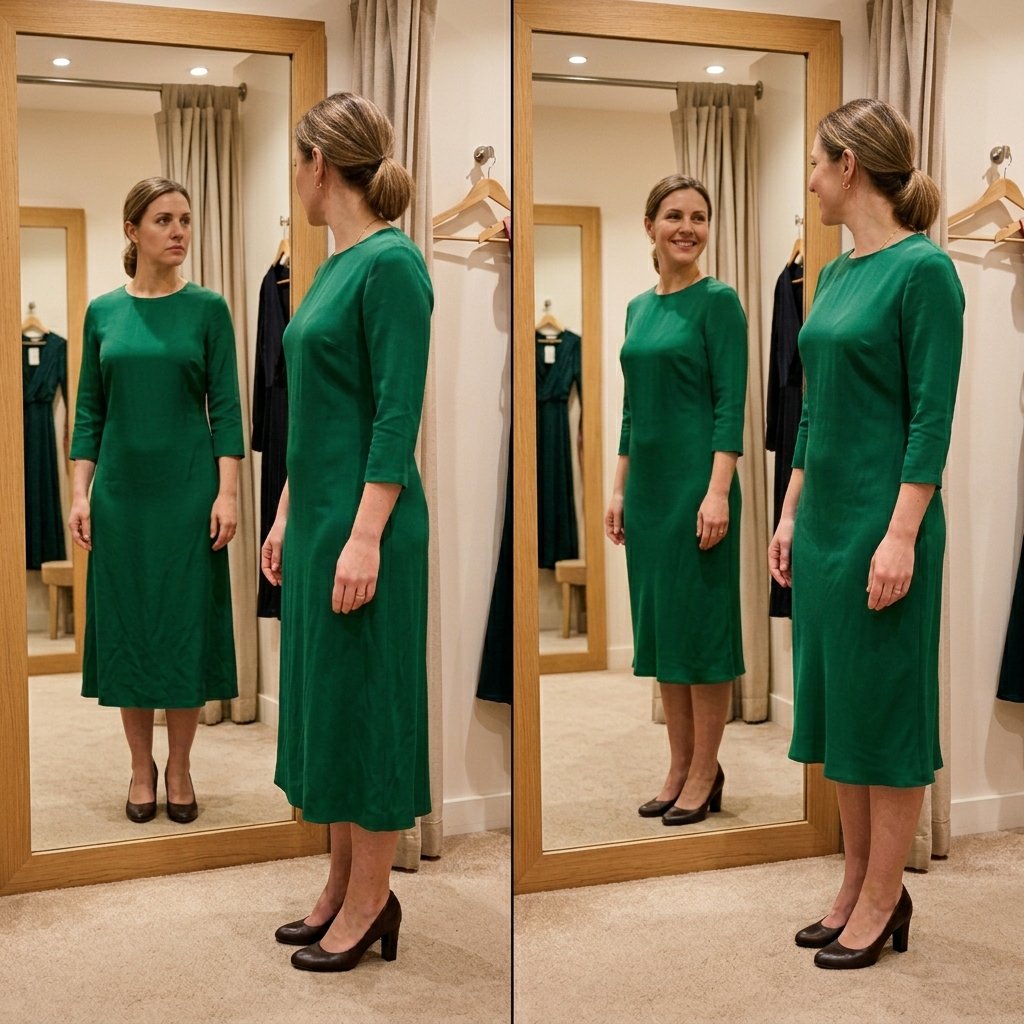
Buying Based on the Hanger
A dress can look beautiful hanging in a store and completely different once you’re moving.
I’ve watched women fall in love with a dress in a fitting room only to discover later that it pulls awkwardly while walking or bunches when sitting.
The best test isn’t standing still in front of a mirror.
Walk in it.
Sit in it.
Turn sideways.
That’s when you’ll know if it truly works.
Following Trends Instead of Proportions
One of the biggest mistakes I see is chasing whatever length influencers are wearing.
The problem is that the same midi dress can land in completely different places depending on your height.
A hem that looks elegant on someone who is 5’10” can look awkwardly long on someone who is 5’2″.
The placement matters more than the trend.
Choosing Shoes That Compete With the Dress
Many women focus entirely on the dress and treat shoes as an afterthought.
The result is often a sleek midi paired with chunky shoes that visually weigh down the entire outfit.
A simple pointed-toe heel often creates a cleaner silhouette than a much more dramatic shoe.
Ignoring Fabric Weight
This sounds boring compared to color or neckline discussions, but fabric weight is often what separates expensive-looking dresses from disappointing ones.
The right fabric skims.
The wrong fabric clings, wrinkles, and highlights areas you weren’t even thinking about.
The Hem-Length Rule Most Style Guides Skip
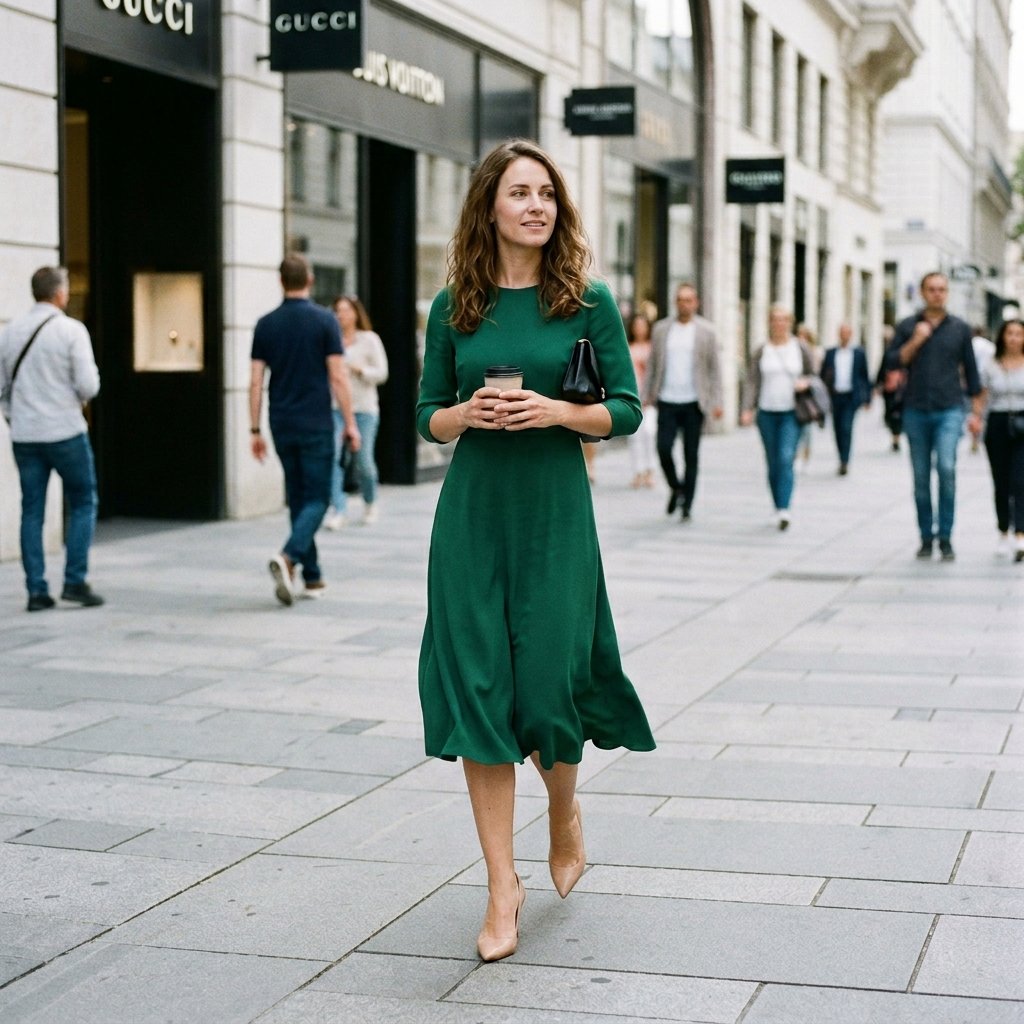
Most style advice tells women that midi dresses should hit somewhere between the knee and ankle.
Technically true.
Practically useless.
What matters is where the hem lands on your leg.
The most flattering midi lengths usually hit either just below the knee or closer to the ankle where the leg naturally narrows.
The least flattering lengths often stop at the widest part of the calf.
I once watched a friend try the same black midi dress in regular and petite sizing. The only difference was about three inches of length.
The petite version looked dramatically better because the hem landed in a more flattering place.
Same dress.
Completely different result.
What Works vs What Doesn’t
| Works | Doesn’t Work |
|---|---|
| Structured crepe fabrics | Thin clingy jersey |
| Hem below the knee or near the ankle | Hem at the widest calf point |
| Pointed-toe heels | Heavy platform shoes |
| Wrap silhouettes | Excessively shapeless cuts |
| One focal accessory | Multiple competing statement pieces |
| Defined waistlines | No shape through the torso |
The goal isn’t following rules.
It’s creating visual balance.
The Midi Cocktail Dress Styles That Consistently Work
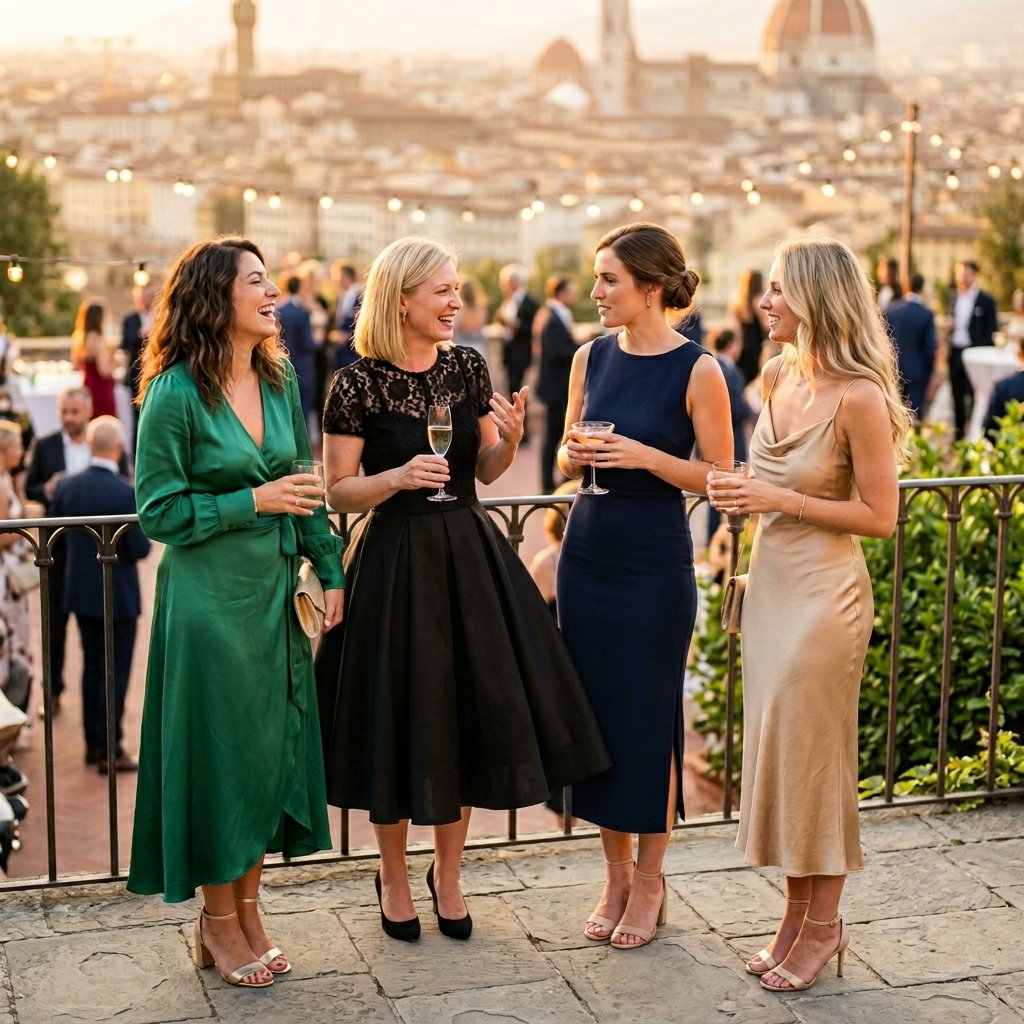
The Wrap Midi
This is still the silhouette I recommend most often.
The diagonal wrap line naturally creates shape through the waist and torso without looking overly structured.
It also adapts well to changing body shapes, which is probably why so many women keep reaching for wrap dresses year after year.
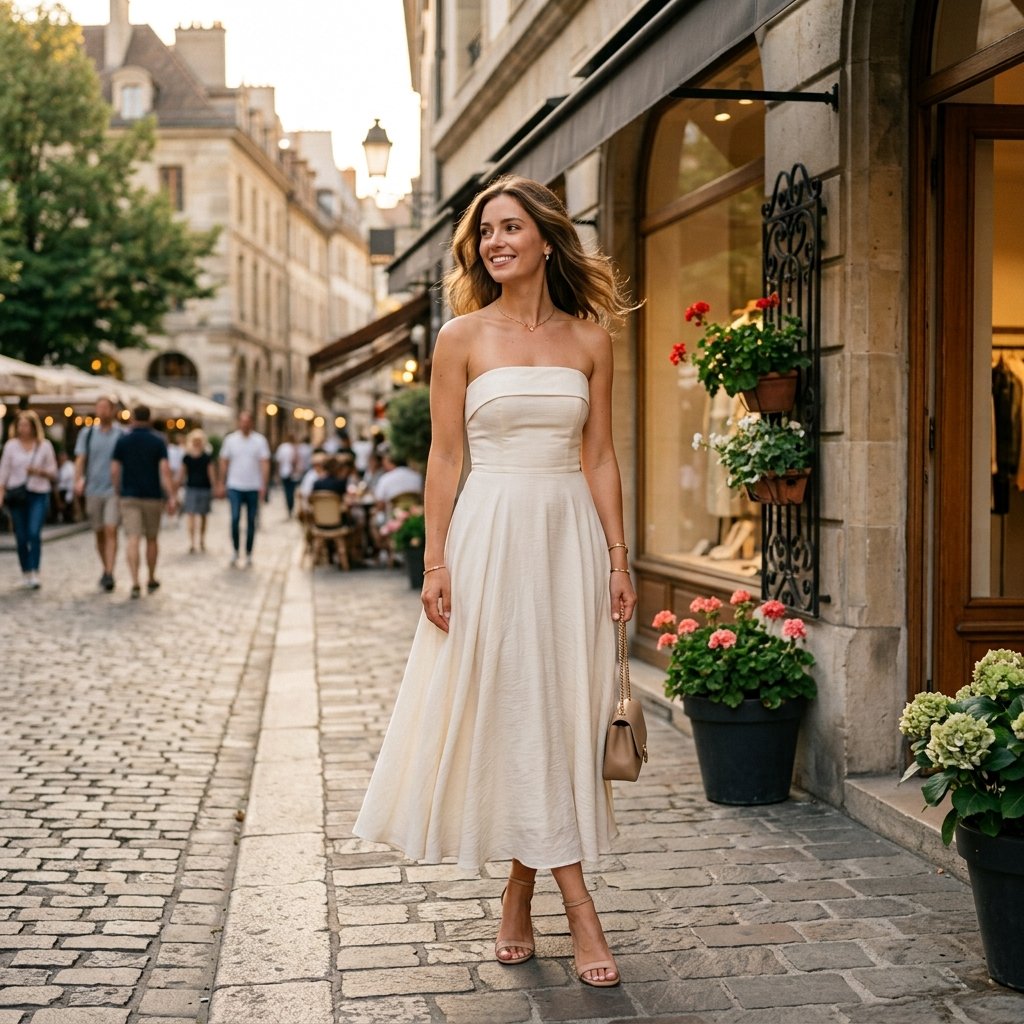
The Fit-and-Flare Midi
This silhouette creates balance.
The fitted bodice provides structure while the skirt creates movement.
I’ve noticed this style photographs particularly well at weddings and formal events because it maintains shape from multiple angles.
The Column Midi
Simple but surprisingly effective.
A column midi creates one continuous vertical line that can look incredibly polished when paired with the right fabric.
The catch is that fabric quality becomes even more important because there’s nowhere for poor construction to hide.
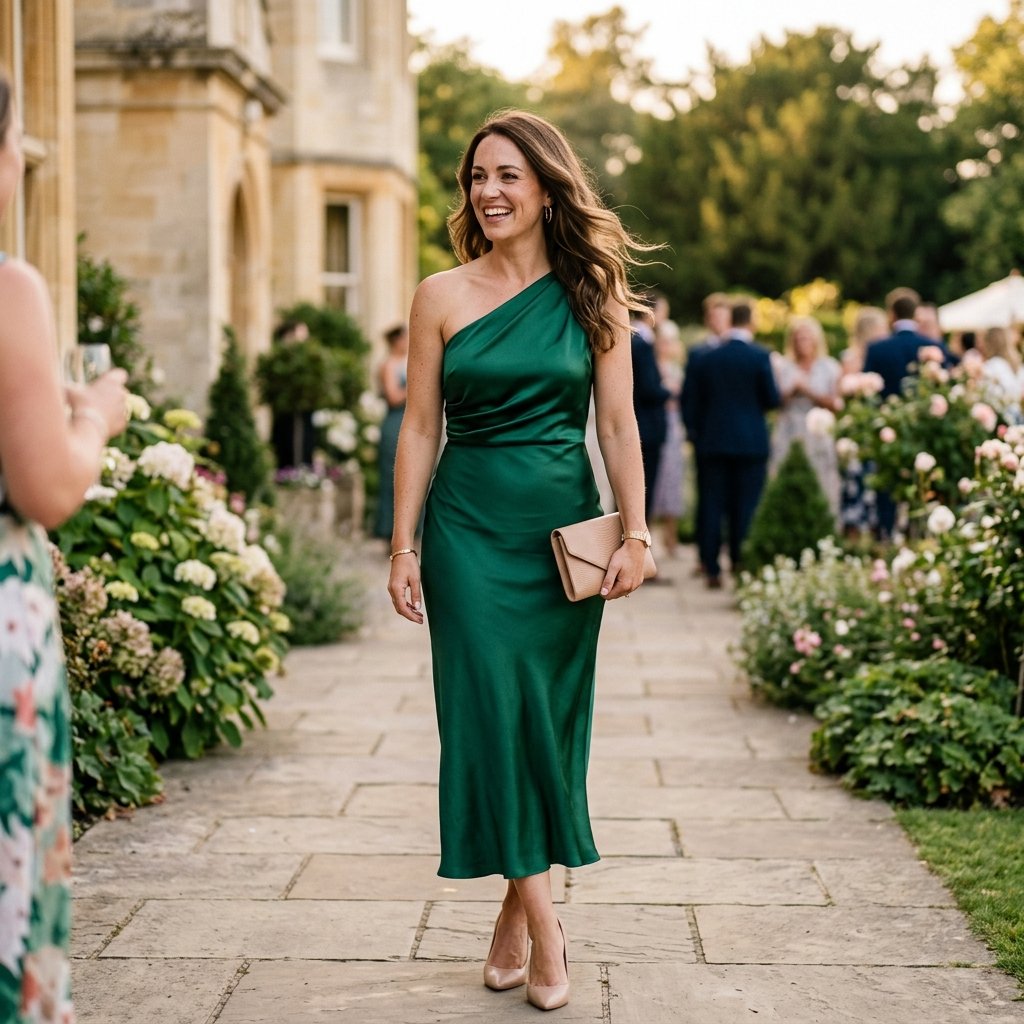
The Slip Midi
Beautiful when it works.
Unforgiving when it doesn’t.
Slip dresses often perform best for evening events, summer celebrations, and women who prefer minimal styling.
They rely heavily on fit and fabric, so they usually require more careful shopping.
Real-Life Situations Where Midi Cocktail Dresses Shine
For Weddings
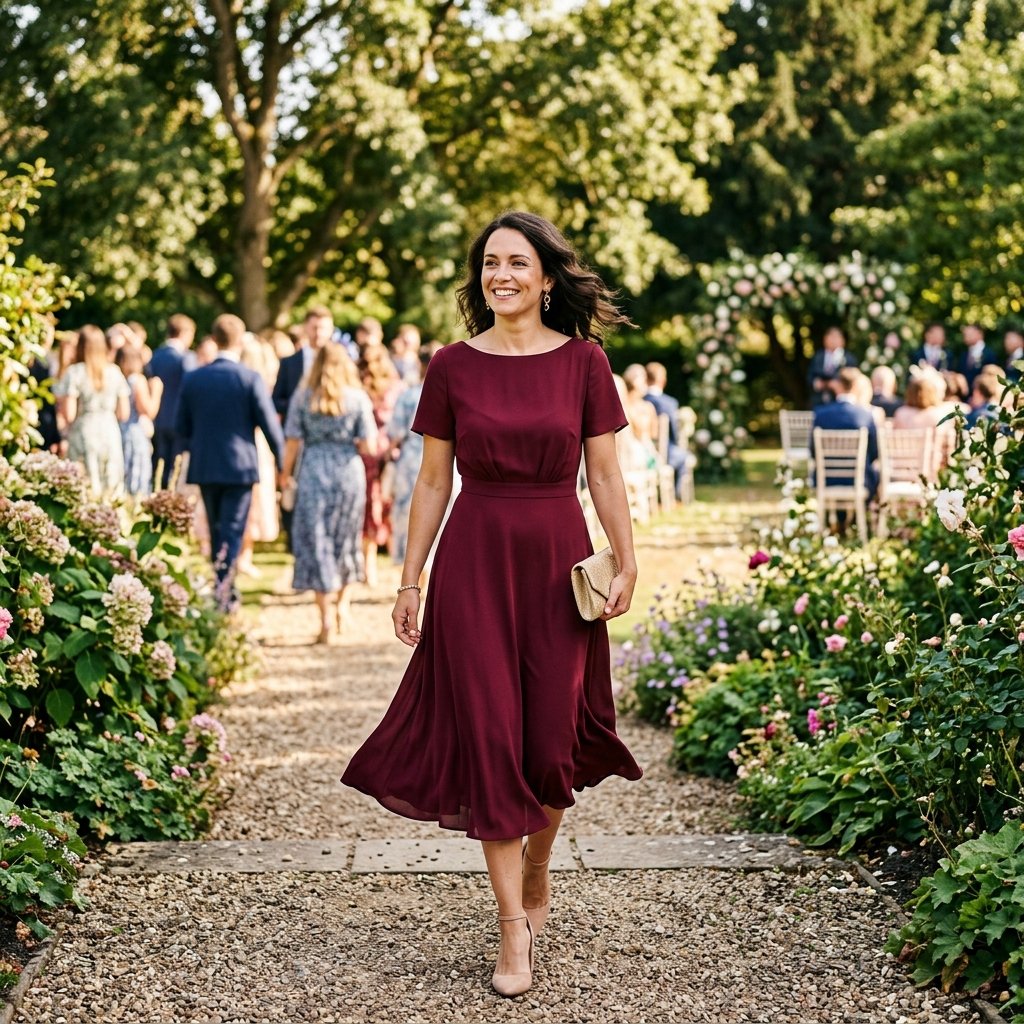
A midi cocktail dress is often the safest and most versatile wedding-guest option.
You look polished without competing with the bridal party.
I’ve found that soft satins, crepes, and elegant floral prints tend to photograph beautifully while still feeling appropriate for a wide range of venues.
For Work Events
Many women assume a work gala requires a dramatic gown.
In reality, a sophisticated midi often looks more confident and modern.
You can move comfortably, network easily, and avoid feeling overdressed if the event ends up being more relaxed than expected.

For Women Over 40
One thing I’ve noticed repeatedly is that many women start choosing dresses that are overly conservative because they don’t want to appear too flashy.
The result can sometimes feel aging rather than elegant.
A modern midi with clean lines often feels fresher than heavily embellished formalwear.
For Petites
Petite women usually benefit from slightly shorter midi lengths.
The goal is maintaining a long visual line rather than allowing the dress to dominate the frame.
I would prioritize fit over trend every single time.
For Curvy Women
Wrap silhouettes, structured fit-and-flare shapes, and fabrics with natural drape tend to perform beautifully.
The key isn’t hiding curves.
It’s allowing the dress to move with them rather than fighting against them.
The Fabric Choice Most People Overlook
If I had to choose between a perfect color and a perfect fabric, I’d choose fabric.
Every time.
Crepe remains one of the most reliable choices because it holds shape while still moving naturally.
Satin looks luxurious but demands more attention to fit.
Velvet works beautifully for cooler seasons because it adds depth and softness.
Quality jersey can be surprisingly elegant, although cheaper versions often lose shape quickly.
I’ve seen average designs look expensive because the fabric was excellent.
I’ve also seen beautiful designs look disappointing because the fabric wasn’t strong enough to support them.
The Shoe Choice That Changes Everything
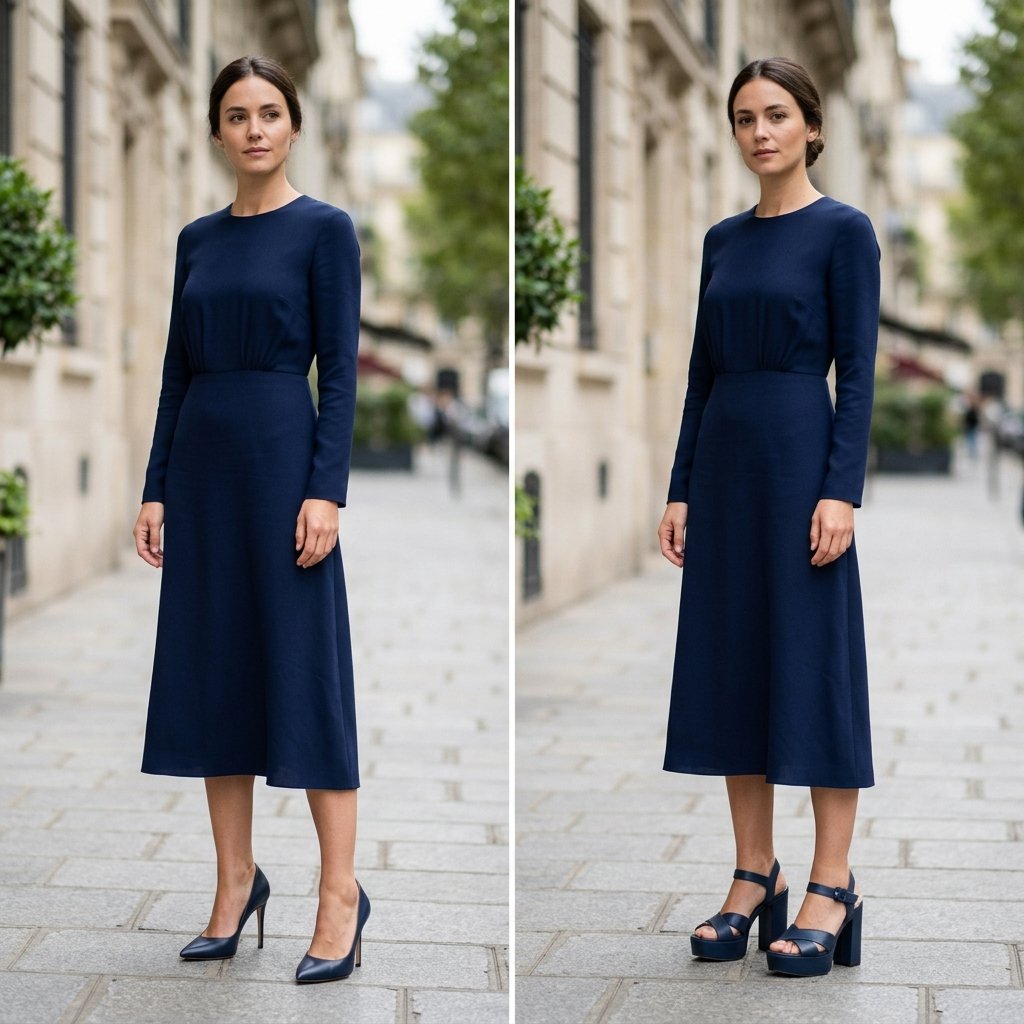
Most women wear heels that are higher than necessary.
A midi cocktail dress already creates visual length.
Adding extremely high heels doesn’t always improve the result.
In many cases, a moderate pointed-toe heel creates a cleaner silhouette and allows you to walk naturally throughout the event.
Confidence shows.
Discomfort shows too.
And one always looks better than the other.
Frequently Asked Questions
Can a midi cocktail dress work for formal weddings?
Yes, especially when the invitation specifies cocktail attire or black-tie optional. For strict black-tie events, floor-length gowns are usually more appropriate.
What color midi cocktail dress gets the most wear?
Navy, emerald, burgundy, black, and deep plum tend to be the most versatile because they work across multiple seasons and occasions.
Are midi cocktail dresses flattering on shorter women?
Absolutely. The key is finding a hem length that works with your proportions rather than choosing a standard length automatically.
Can you wear flats with a midi cocktail dress?
Yes. This often works especially well on taller women or with dresses that have a slightly shorter midi length.
Do midi cocktail dresses go out of style?
Not really. Specific details change, but the midi silhouette itself has remained relevant for decades because it fills a practical gap between mini and formal-length dresses.
My Final Thought
The funny thing about midi cocktail dresses is that most women spend hours searching for the perfect dress when the real secret is usually much simpler.
The right hem.
The right fabric.
The right proportions.
I’ve seen expensive dresses fail and surprisingly affordable dresses become someone’s most-worn event outfit simply because those three things were right.
When you find a midi cocktail dress that lets you walk into a room without adjusting it, tugging at it, or thinking about it every five minutes, you’ve probably found the one worth keeping.