I once spent an entire evening adjusting one of those dark evening gown that looked flawless in my bedroom mirror and strangely disappointing everywhere else.
The fit wasn’t terrible. The dress wasn’t cheap. Yet somehow every photo made me look flatter, wider, and far less polished than I felt walking out the door.
Since then, I’ve paid much closer attention to what actually makes a dark evening gown work in real life rather than what looks good on a hanger.
The surprising truth is that most dark evening gowns don’t fail because of the color. They fail because of fabric, proportions, movement, and a handful of small details that almost nobody talks about until after the event is over.
Why Some Dark Evening Gowns Look Expensive While Others Don’t
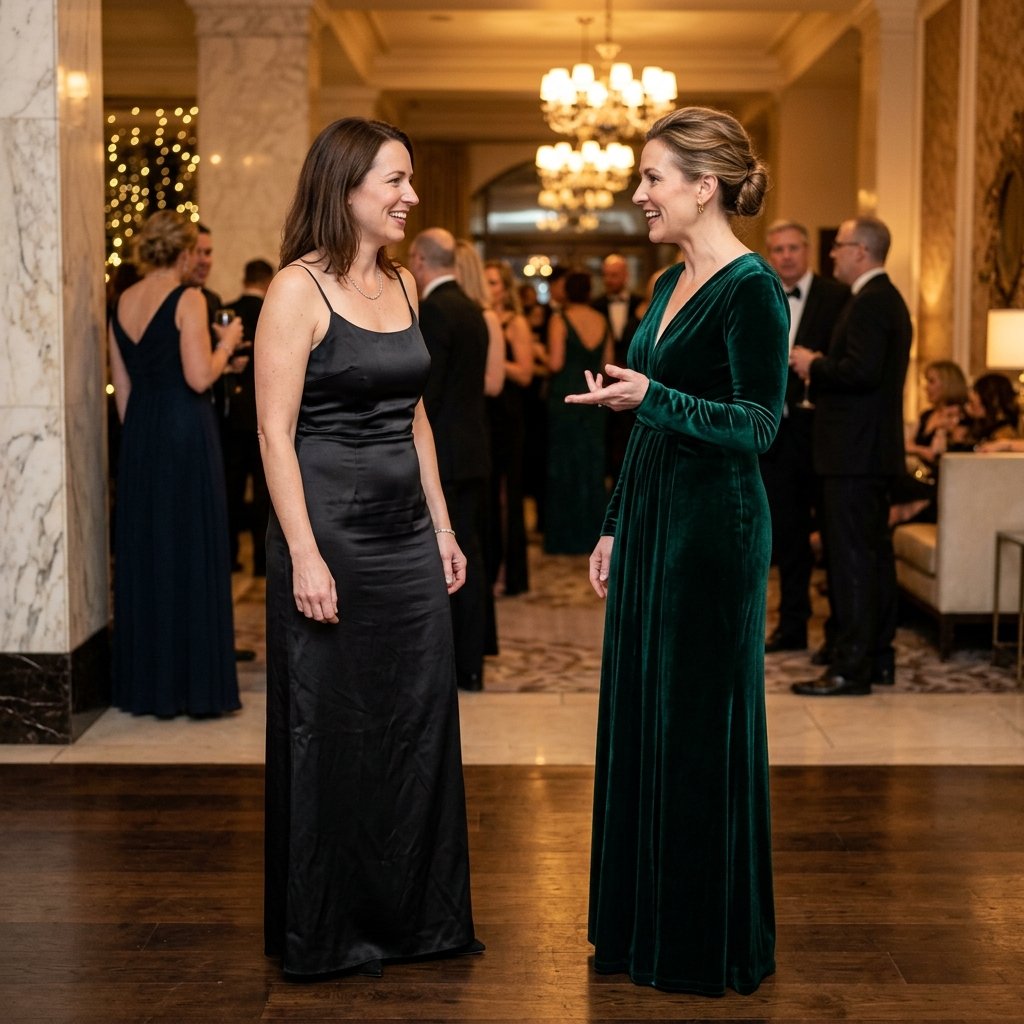
One thing I’ve noticed after years of attending weddings, galas, charity events, and formal dinners is that darkness alone doesn’t create elegance.
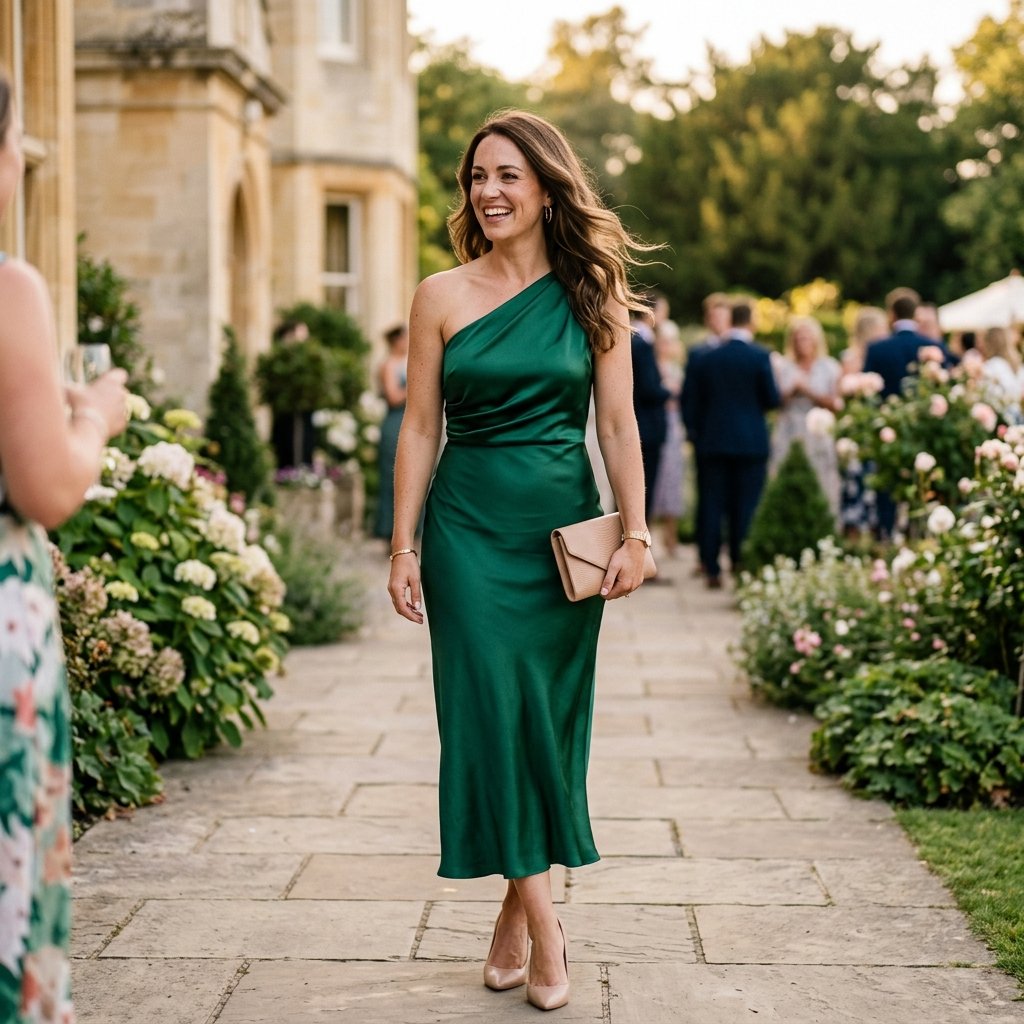
A true black gown in the wrong fabric can look surprisingly flat. Meanwhile, a deep navy, emerald, or burgundy gown often appears richer and more dimensional in photographs.
The difference is usually texture.
Velvet catches light differently than crepe. Silk reflects movement differently than polyester satin. Even subtle variations in texture create shadows and highlights that help a gown maintain shape in photographs.
This is why two women can wear nearly identical silhouettes and look completely different in event photos.
One appears sophisticated and polished.
The other disappears into a dark silhouette.
The camera notices texture far more than most people realize.
What Most Women Get Wrong About Dark Evening Gowns
Choosing Black Automatically
Black feels safe.
That’s exactly why many women choose it.
But safe isn’t always flattering.
I’ve seen women who looked washed out in black suddenly come alive in deep navy or rich emerald. The darkness remains, but the subtle color variation creates far more visual interest.
Focusing Only on the Front View
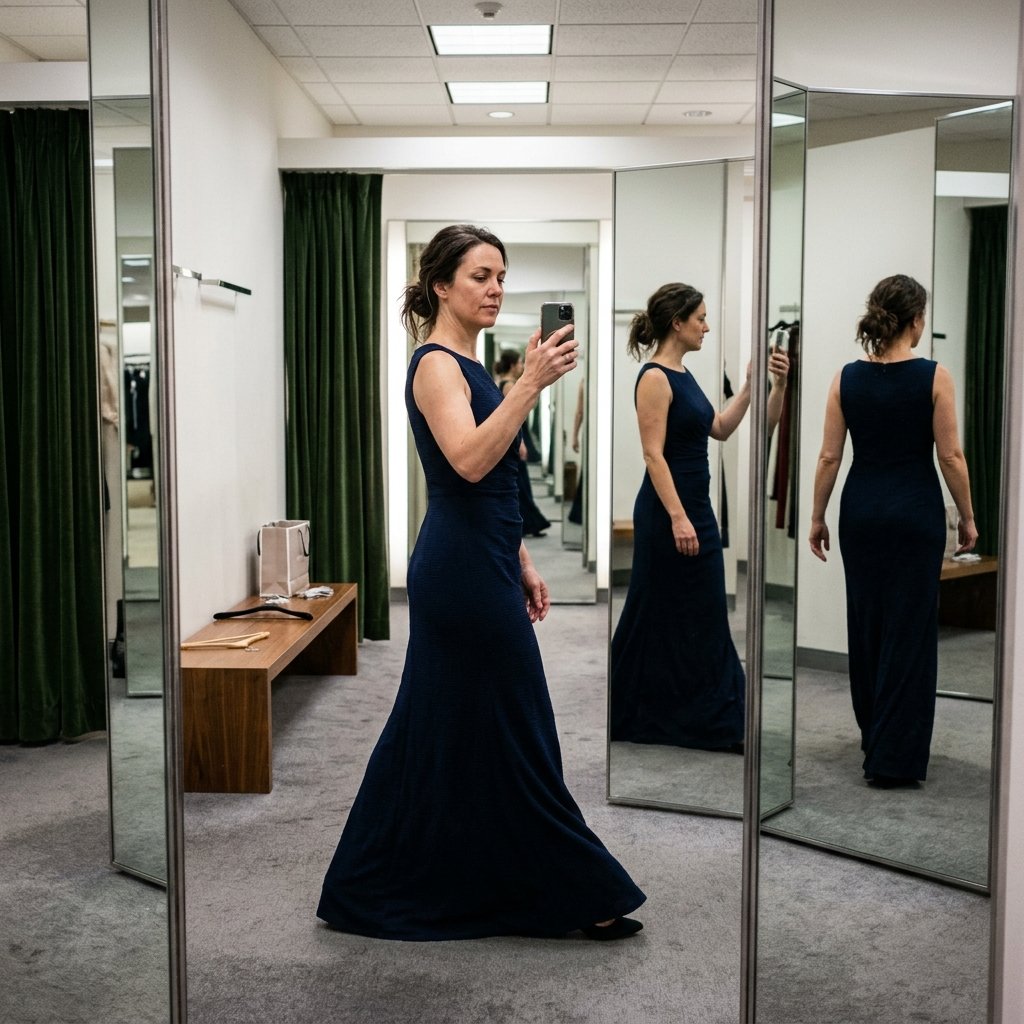
Most fitting-room decisions happen facing a mirror.
Unfortunately, events happen from every angle.
A gown that looks stunning standing still can bunch awkwardly while walking, sitting, or dancing.
I always pay attention to movement now because movement is what guests actually see.
Prioritizing Trendy Details Over Structure
Fashion trends change quickly.
Good construction doesn’t.
A well-cut gown with beautiful draping almost always outperforms a heavily trendy design that relies on dramatic cutouts or excessive embellishment.
Assuming More Sparkle Means More Glamour
This sounds logical in theory.
In reality, too much sparkle often overwhelms the dress.
Rich fabrics create sophistication.
Excessive embellishment often creates distraction.
What Works vs What Doesn’t
| Doesn’t Work | Works Better |
|---|---|
| Flat matte black fabric | Velvet, silk, or textured fabric |
| Extremely high stilettos | Comfortable heels with stability |
| Multiple statement accessories | One focal accessory |
| Poorly fitted strapless bodice | Structured neckline with support |
| Excess volume around hips | Defined waist with balanced skirt |
| Trend-driven details | Timeless construction |
The biggest difference isn’t usually price.
It’s balance.
The gowns that look expensive rarely try too hard.
The Necklines That Consistently Photograph Well

After seeing hundreds of formal-event photos, certain necklines consistently perform better than others.
A soft V-neck tends to create length without feeling revealing.
Square necklines often provide beautiful structure and balance.
Boat necklines can look incredibly elegant, especially when paired with simple accessories.
What I rarely trust without trying first is an unstructured strapless bodice.
It can look incredible for ten minutes.
It can become frustrating for four hours.
A gown should allow you to enjoy the event, not spend the evening adjusting it.
Why Fit Matters More Than Body Type
Fashion conversations often focus on body shape.
Personally, I think fit matters far more.
I’ve seen petite women overwhelmed by too much fabric and curvy women transformed by excellent tailoring.
The common denominator is proportion.
A gown should skim the body rather than fight against it.
Pulling fabric creates tension.
Excess fabric creates bulk.
Both become surprisingly obvious in photographs.
One detail I pay attention to is vertical seaming. Long uninterrupted lines help the eye travel naturally through the silhouette and often create a cleaner overall appearance.
Choosing the Right Dark Color
Dark evening gowns don’t need to be black.
In fact, some of the most memorable gowns I’ve seen weren’t black at all.
Deep Navy
Sophisticated, timeless, and often softer than black in photographs.
Emerald Green
Rich and luxurious without feeling predictable.
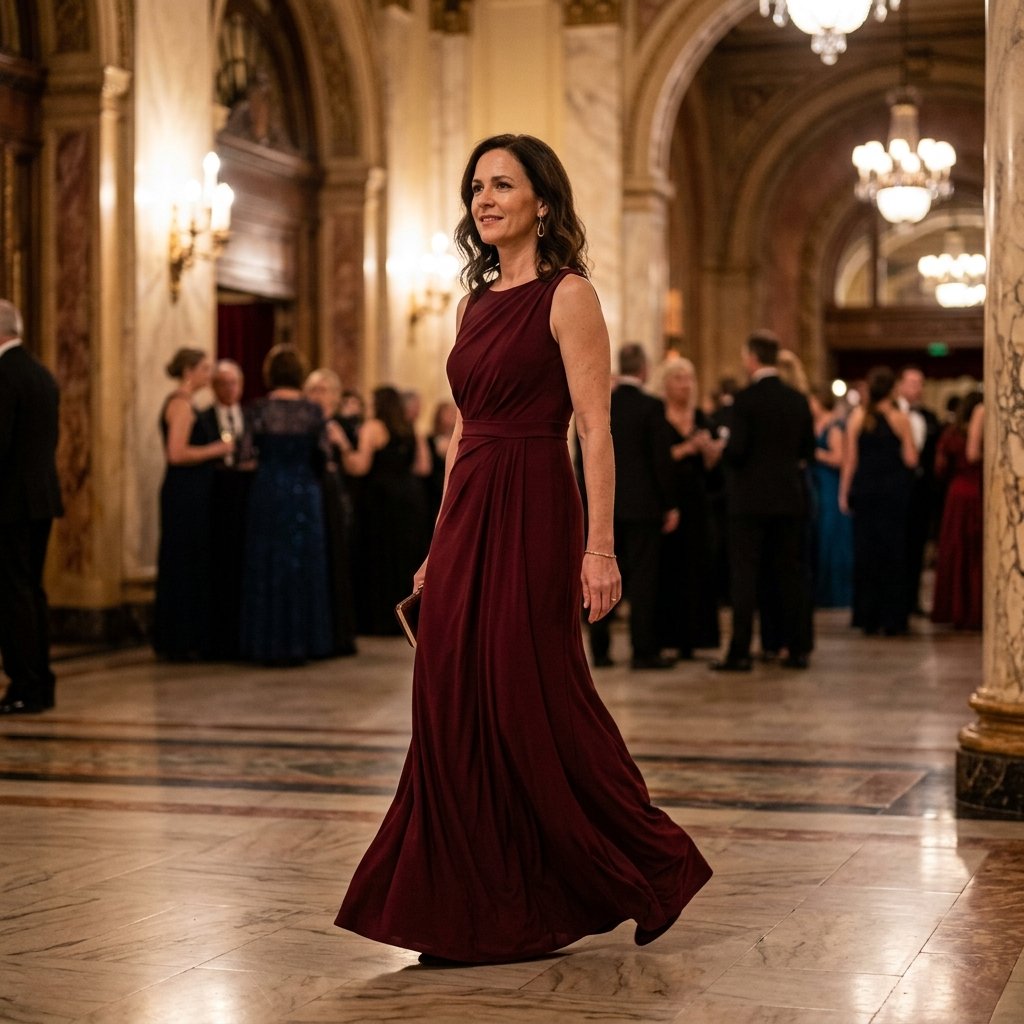
Burgundy
Warm, dramatic, and particularly beautiful during fall and winter events.
Deep Plum
Often overlooked but incredibly elegant under evening lighting.
Charcoal
A great option for women who find black too harsh but still want something neutral.
Whenever possible, I take a quick photo in the fitting room.
Store lighting is rarely flattering. If a color survives fluorescent lighting, it usually performs well almost everywhere else.
Dark Evening Gowns for Different Situations
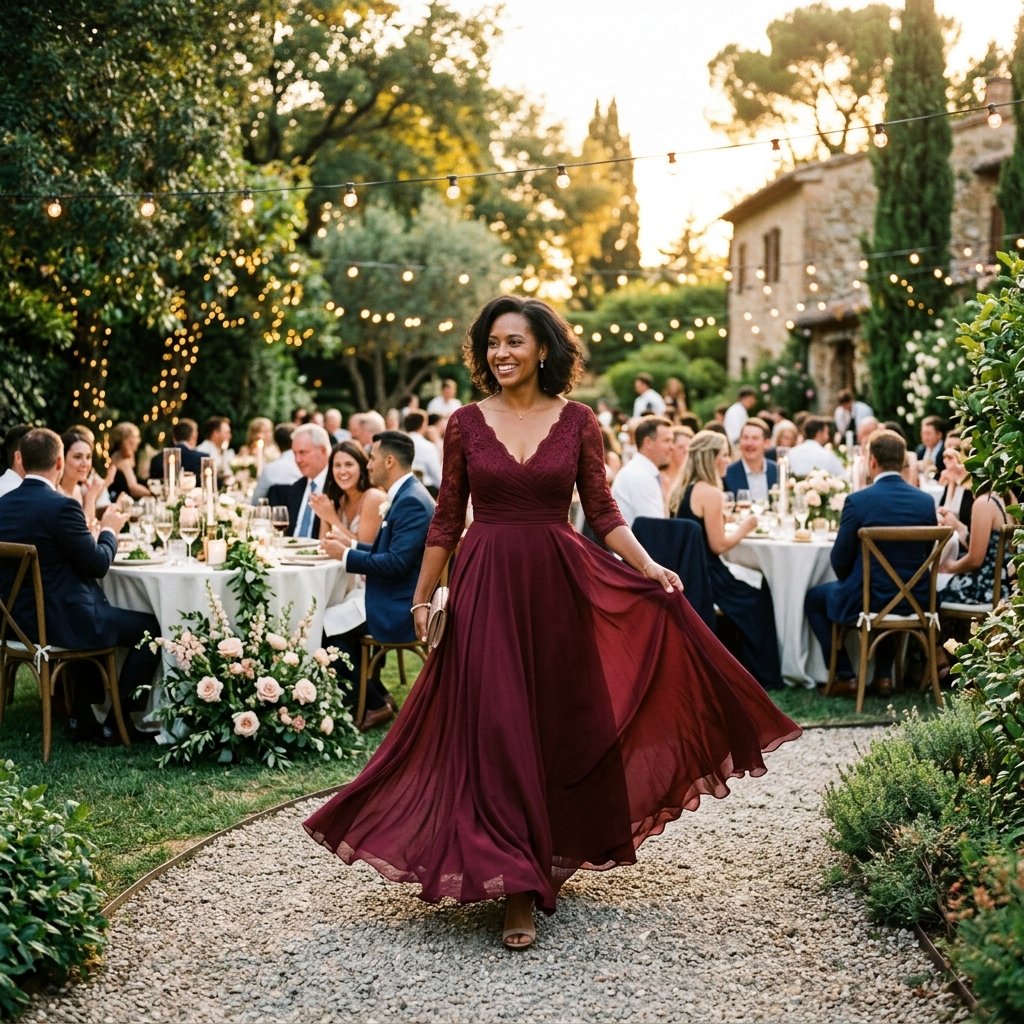
For Weddings
I generally prefer navy, emerald, or burgundy over black.
Wedding photography often captures subtle color beautifully, and these shades feel festive while remaining elegant.
You might also enjoy our wedding guest outfit ideas guide for more event-specific inspiration.
For Charity Galas and Formal Fundraisers
Texture becomes extremely important.
Venue lighting is usually dramatic, making velvet, silk, and structured fabrics stand out more effectively than flat materials.
For Women Over 40
The most successful gowns I’ve seen focus on structure rather than trends.
That doesn’t mean dressing conservatively.
It means choosing pieces that feel intentional.
Clean lines almost always outlast trend-driven details.
For Petites
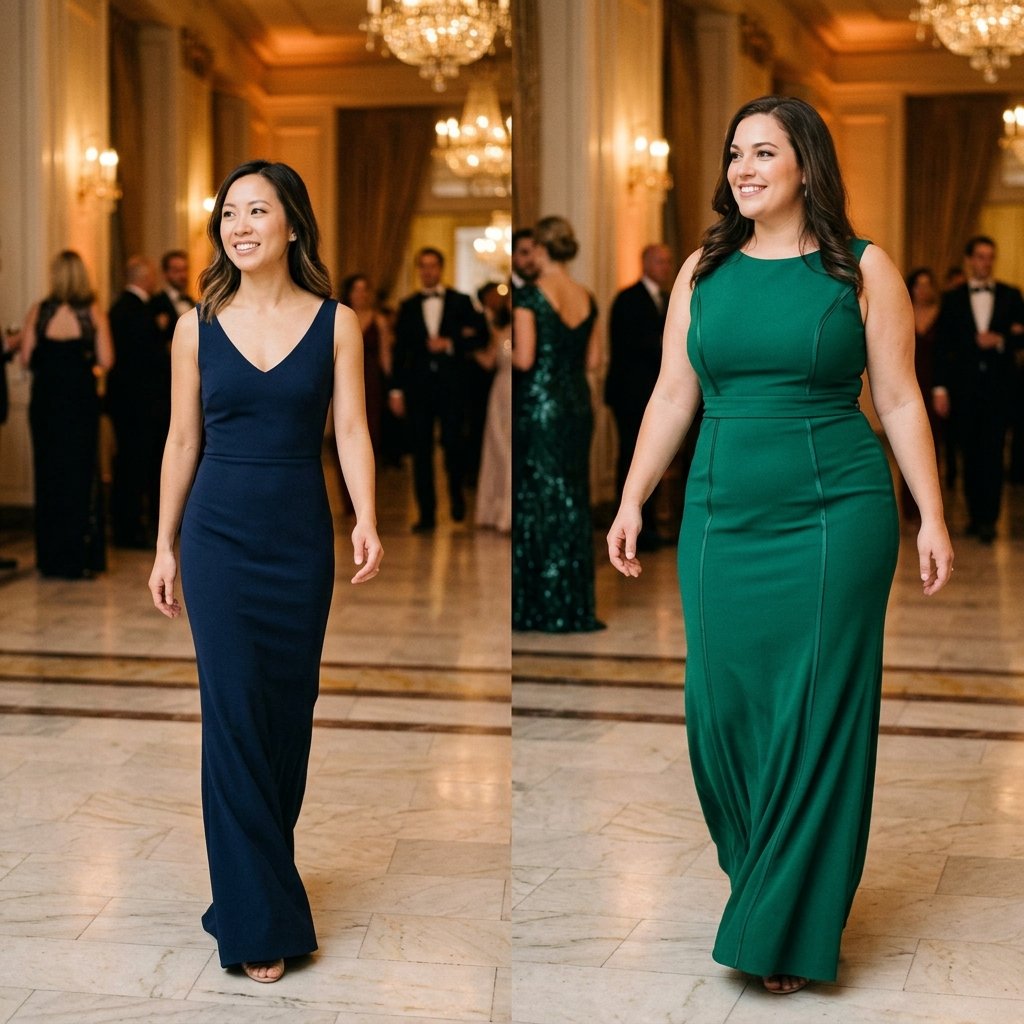
Excess fabric is usually the biggest challenge.
Cleaner silhouettes and slightly higher waist placement often create a more balanced look.
For Curvy Women
I’ve noticed that gowns with defined waists and thoughtful seaming consistently outperform shapeless designs.
Structure creates shape far more effectively than compression.
Accessories That Actually Complement a Dark Evening Gown
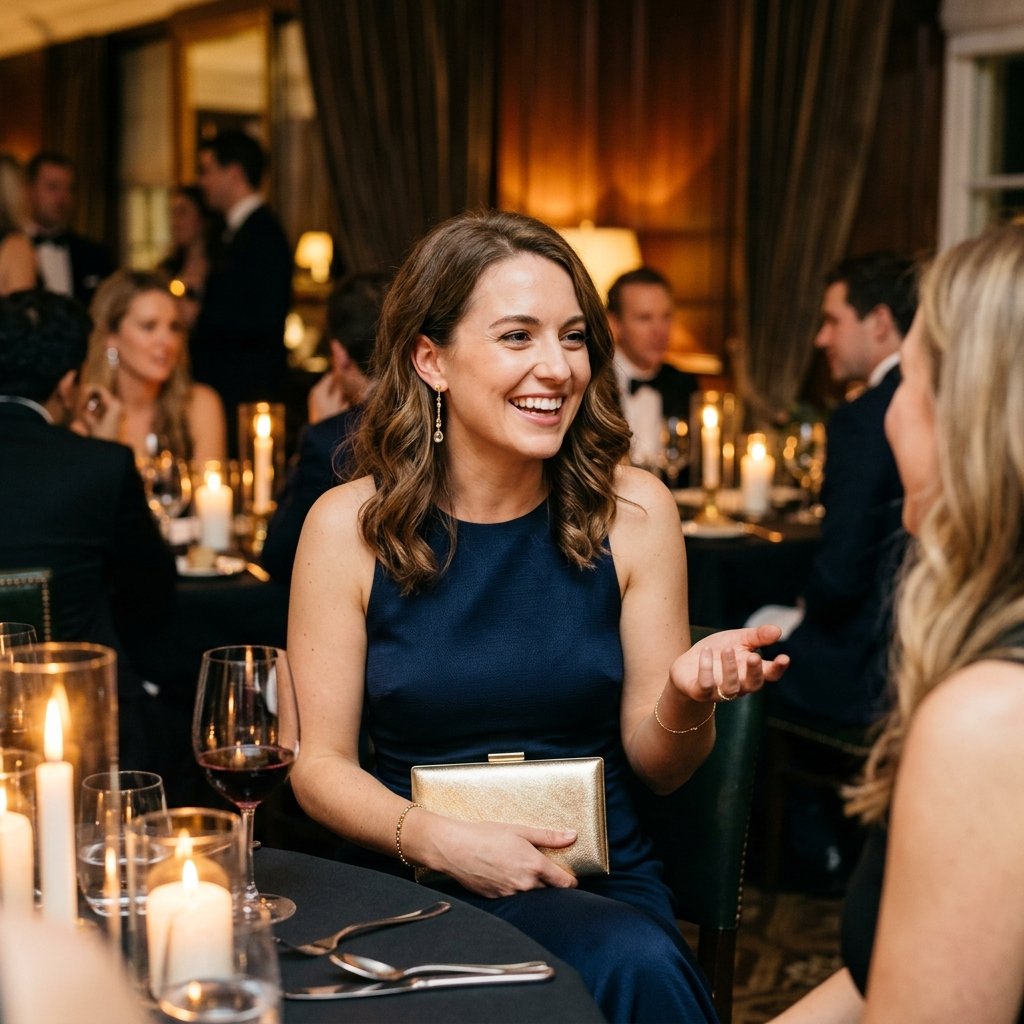
One of the easiest mistakes to make is adding too much.
The gown is already providing drama.
The accessories don’t need to compete.
I usually follow a simple rule:
One focal point.
Everything else supports it.
If the earrings are dramatic, keep the necklace minimal.
If the gown already has embellishment, simplify the jewelry.
If the shoes are interesting, let them have their moment.
The most elegant outfits often feel surprisingly restrained.
Common Styling Mistakes I Still See at Formal Events
Even beautifully dressed women sometimes make avoidable mistakes.
Wearing Shoes That Are Too High
Comfort affects posture.
Posture affects photographs.
By the third hour, uncomfortable shoes usually reveal themselves.
Choosing a Gown That’s Too Long
Dragging fabric photographs poorly and creates awkward movement.
Ignoring Venue Conditions
A velvet gown might feel perfect for a winter gala and completely overwhelming for a summer wedding.
Matching Everything Exactly
Perfectly matching shoes, bag, jewelry, and gown often feels dated.
A little contrast creates far more interest.
FAQ
Is black always the best choice for a dark evening gown?
Not necessarily.
Deep navy, emerald, burgundy, and plum often photograph better while offering the same sophisticated feel.
Can a dark evening gown work for summer events?
Absolutely.
Fabric matters more than color. Lightweight materials help dark shades feel appropriate even in warmer months.
What shoes work best with a floor-length gown?
The best shoes are usually the ones you can comfortably wear for several hours. Stability often matters more than heel height.
How can I make a dark evening gown look more expensive?
Focus on fit, fabric texture, and proportion. These factors usually have a bigger impact than designer labels.
Are dark evening gowns flattering for all ages?
Yes. The key is choosing a silhouette and fabric that work with your proportions and the occasion.
My Final Take
The best dark evening gown isn’t the most expensive one in the room.
It’s the one that lets you stop thinking about your clothes altogether.
When the fabric moves beautifully, the proportions feel balanced, and the fit works with your body instead of against it, confidence tends to take over naturally.
That’s usually the point where people start noticing you rather than the dress.