The first time I wore a black bridesmaid dress, I finally understood why black bridesmaid dresses have become such a popular choice for modern weddings.
Everything felt polished, the setting was gorgeous, and the bridal party looked effortlessly elegant. Then the wedding gallery arrived.
What I remembered as sleek black gowns looked more like a row of dark shapes standing beside the bride. The dresses had almost no detail, the silhouettes blended together, and the photos lacked the dimension I remembered seeing in person.
Since then, I’ve attended several weddings with black bridesmaid dresses, and I’ve noticed something interesting: some bridal parties look effortlessly sophisticated, while others unintentionally create the exact “funeral party” effect brides try to avoid.
The difference usually has very little to do with the color itself.
It’s the fabric, the silhouette, and the way black interacts with light.
Why Black Bridesmaid Dresses Sometimes Fail in Photos
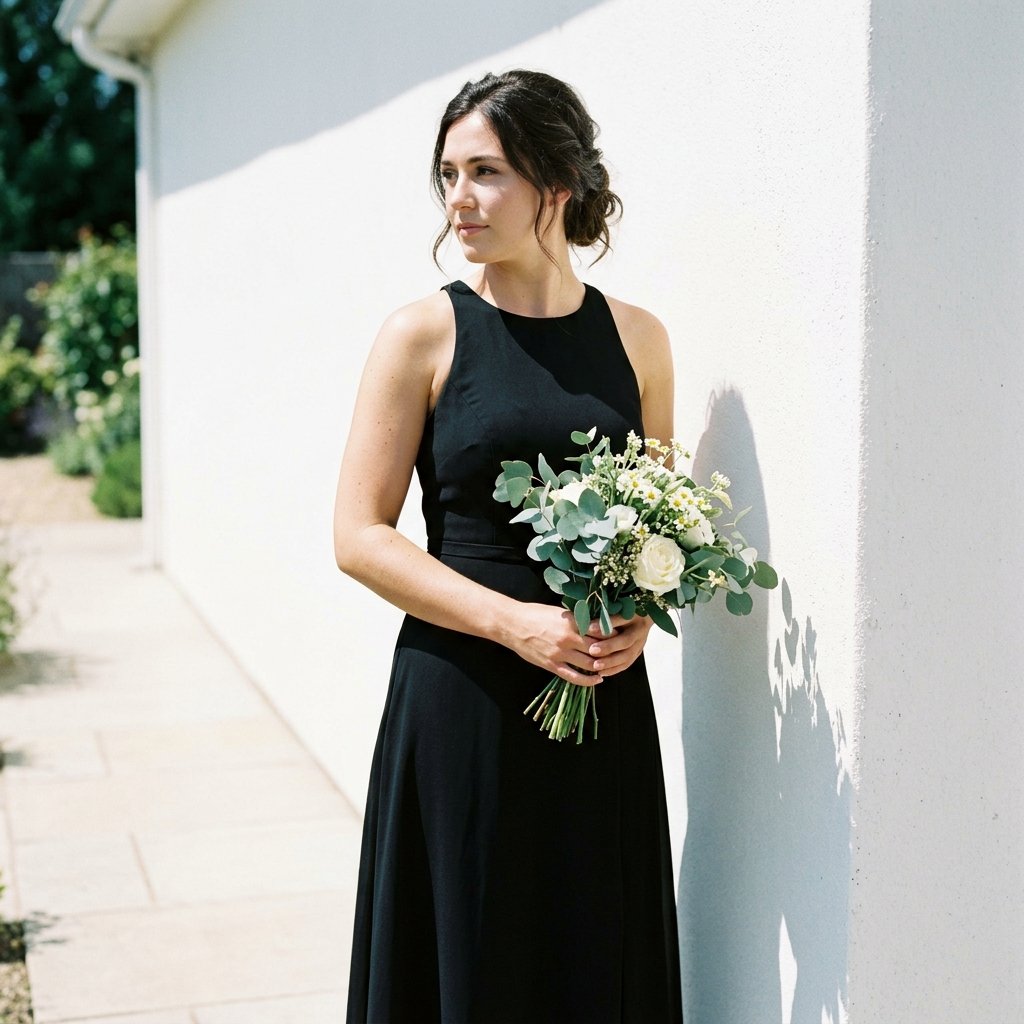
Most people blame the color.
I don’t.
Black is one of the most elegant choices for a bridal party. It feels timeless, photographs beautifully under the right conditions, and almost always looks more expensive than it actually is.
The problem starts when every bridesmaid wears the same dark fabric without any visual contrast.
Cameras naturally expose for brighter elements in a wedding scene—the bride’s dress, flowers, light walls, or outdoor backgrounds. When that happens, black fabric can lose detail and depth.
What looked stunning in person suddenly becomes one continuous dark shape.
I’ve seen this happen most often with matte fabrics and identical floor-length gowns.
The bridal party looks coordinated, but individual dresses disappear.
The Fabric Choice Most Bridesmaids Overlook
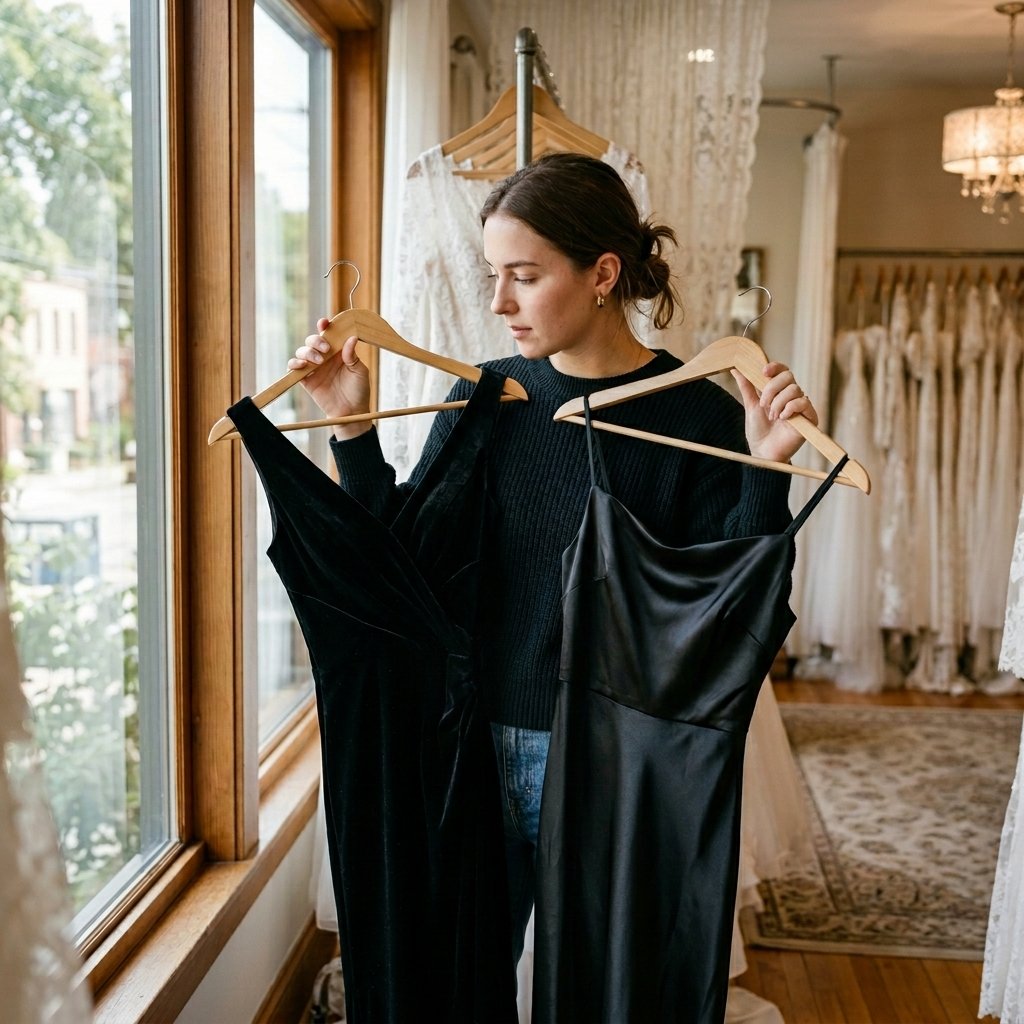
If I had to choose one factor that affects photos more than anything else, it would be fabric.
Not all black fabrics behave the same way.
Some absorb light.
Others reflect it.
That difference changes everything.
Velvet
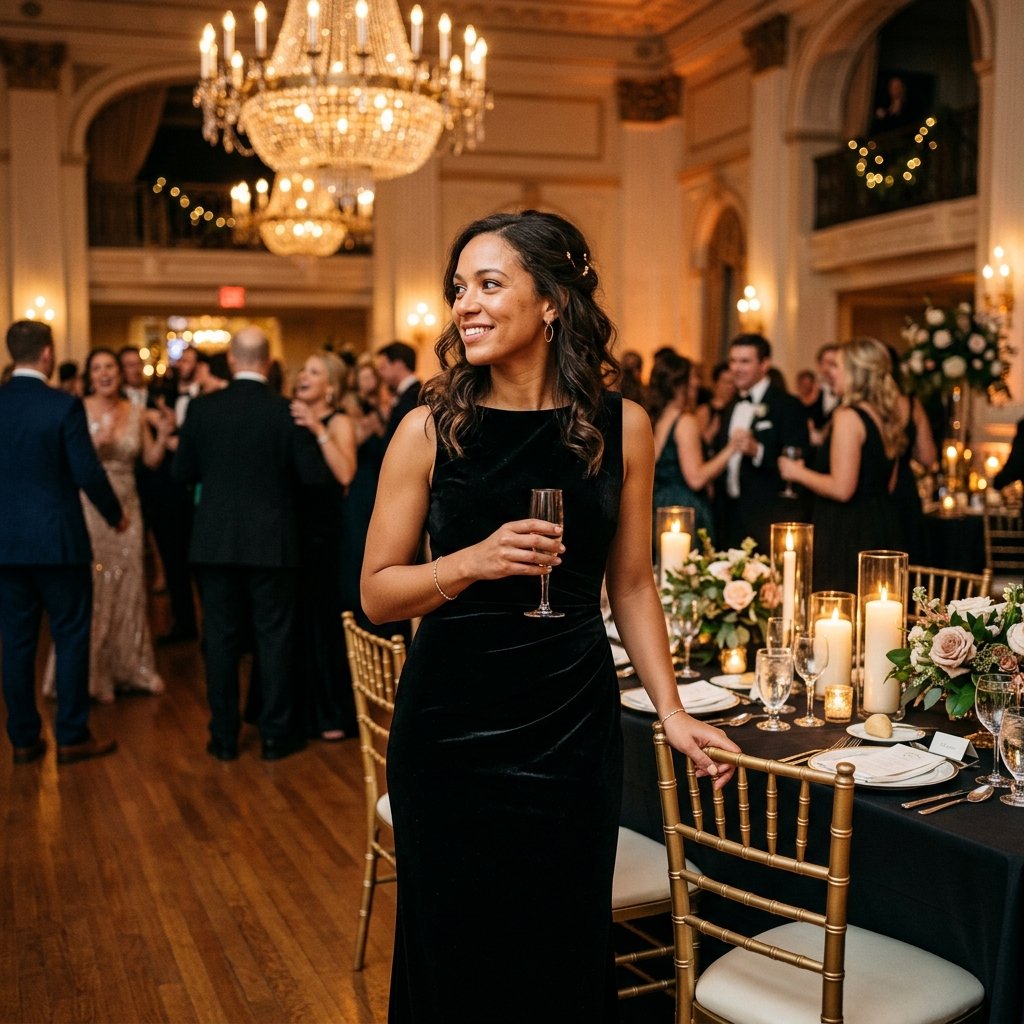
Velvet remains one of my favorite options for fall and winter weddings.
Most people assume velvet absorbs light because it’s dark, but the texture creates subtle variation across the fabric. That variation helps cameras capture depth and shape.
It also photographs far more luxuriously than many bridesmaids expect.
Satin and Charmeuse
These fabrics create natural highlights as they move.
I’ve noticed satin dresses often look better in photos than they do hanging on a rack because the fabric creates dimension whenever light hits it.
The tradeoff is that satin reveals more underneath, so fit becomes especially important.
Matte Crepe
This is where many bridal parties run into trouble.
Matte crepe looks sophisticated in person and feels bridal without being flashy.
But in photos, especially indoors, it can flatten dramatically.
I wouldn’t avoid it entirely, but I’d pair it with details that create contrast elsewhere.
What Most Women Get Wrong About Black Bridesmaid Dresses
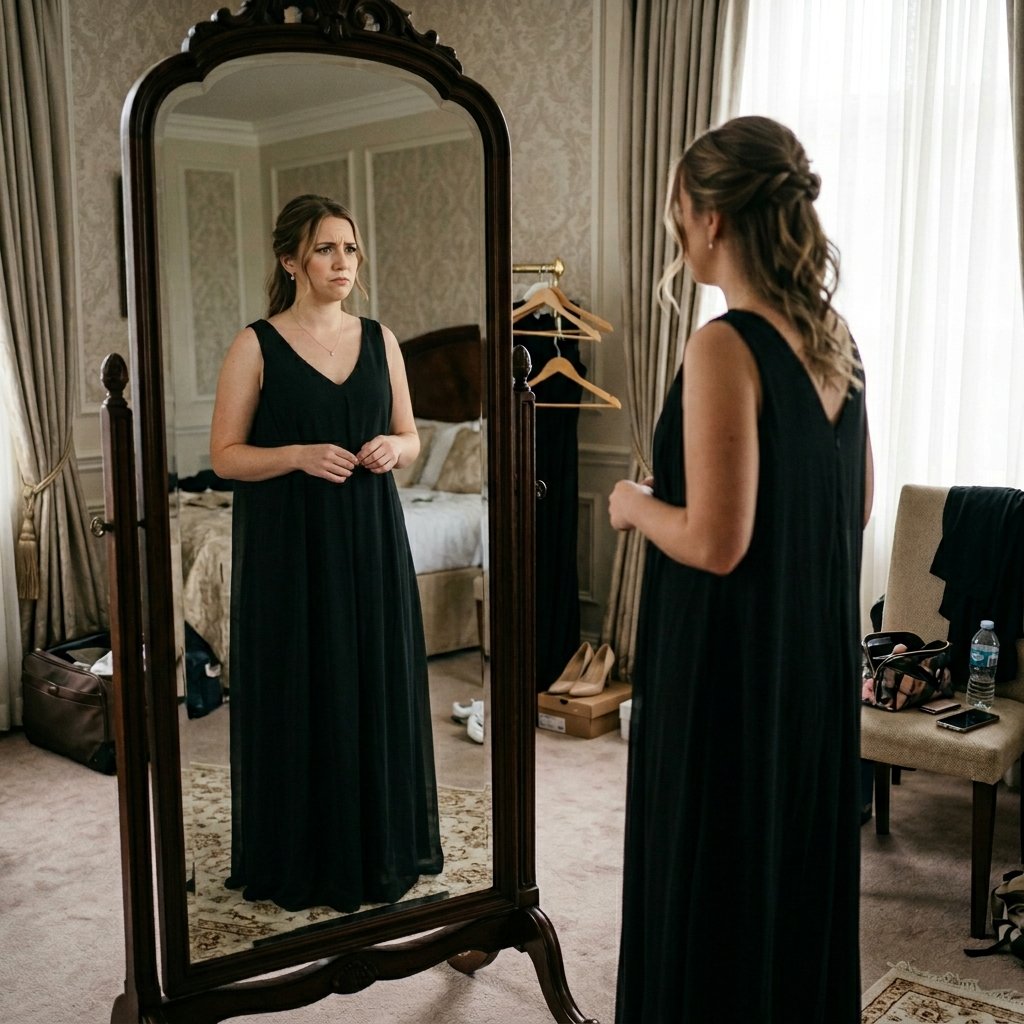
Choosing Black Because It’s “Safe”
Black feels universally flattering, so people often stop evaluating the dress itself.
I’ve seen women choose unflattering cuts simply because the dress was black.
The color doesn’t fix poor fit.
A well-fitted navy, emerald, or burgundy dress will always photograph better than a poorly fitted black one.
Matching Every Single Detail
This sounds good in theory.
In reality, identical dresses can create a visual wall of black fabric.
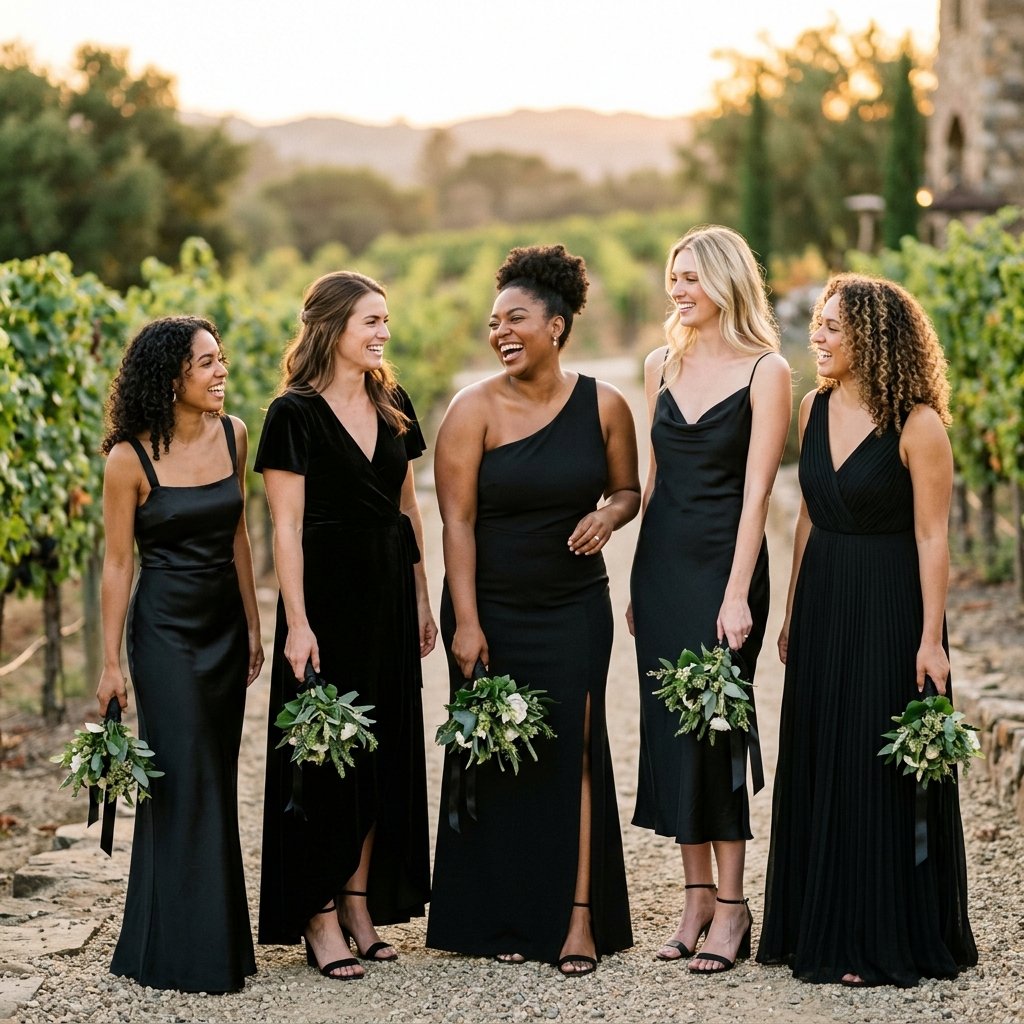
Some of the best wedding galleries I’ve seen featured bridesmaids wearing different necklines and silhouettes within the same color palette.
The photos felt more dynamic and more flattering for everyone involved.
Ignoring Venue Lighting
A dress that looks amazing under boutique lighting may look completely different in a candlelit ballroom.
I always encourage looking at fabric in natural daylight before making a decision.
The difference can be surprising.
Wearing Black Shoes
I’ve made this mistake myself.
In full-length photos, black shoes often disappear entirely beneath the dress.
Metallic or nude shoes usually create a cleaner visual finish.
What Works vs What Doesn’t
| Works | Doesn’t Work |
|---|---|
| Velvet and satin fabrics | Flat matte jersey |
| Mixed silhouettes | Identical columns on every bridesmaid |
| Defined waistlines | Shapeless straight cuts |
| Metallic accessories | No contrast at all |
| Textured fabrics | Completely flat fabrics |
| Bright bouquets | Very dark bouquets |
| Nude or metallic shoes | Black shoes with black gowns |
The goal isn’t adding more details.
The goal is creating enough contrast for the eye to follow.
The Silhouette Details That Change Everything
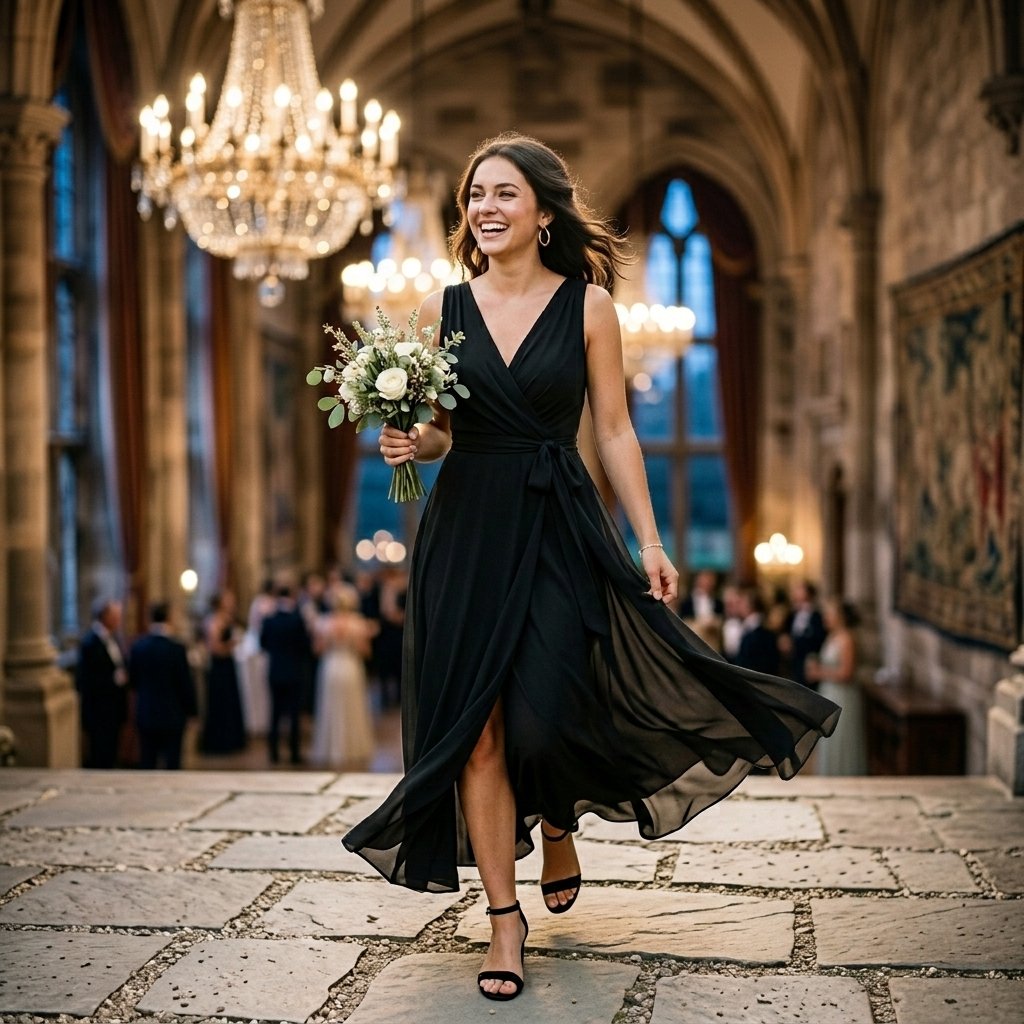
One thing I’ve noticed after looking through countless wedding galleries is that silhouette matters more than most people realize.
Black dresses need visual breaks.
Without them, the eye struggles to distinguish shape.
Some of the details that consistently photograph well include:
- Wrap styles
- Cowl necklines
- Defined waist seams
- Pleated skirts
- One-shoulder designs
- Subtle slits
- Open-back details
What makes these features successful isn’t trendiness.
It’s that they create movement, shape, and separation.
That’s exactly what dark colors need.
Black Bridesmaid Dresses for Outdoor Weddings
Outdoor weddings are actually one of the best settings for black bridesmaid dresses.
Natural sunlight reveals texture and highlights that indoor lighting often misses.
I’ve attended vineyard weddings where black dresses looked incredibly polished against greenery and warm landscapes.
The only challenge is temperature.
For summer ceremonies, lighter fabrics usually work better than heavy velvet or structured satin.
Comfort becomes important when you’re standing outside for several hours.
Black Bridesmaid Dresses for Ballroom Weddings
Ballrooms create the opposite challenge.
The lighting tends to be warmer and darker.
This is where texture becomes critical.
A velvet gown often photographs better than a completely matte dress because the fabric naturally catches available light.
If the reception is heavily candlelit, a dress with subtle sheen usually performs better than one that absorbs all the surrounding light.
For Petite Bridesmaids
One issue petite women often face is visual weight.
Long black dresses can sometimes overwhelm a smaller frame.
I’ve found that dresses with:
- Higher waistlines
- Vertical seam details
- Narrow skirts
- Strategic slits
tend to feel lighter and more proportional.
The dress still looks formal without appearing oversized.
For Curvy Bridesmaids
A common misconception is that black automatically creates a slimming effect.
Sometimes it does.
Sometimes it doesn’t.
Fit matters far more than color.
The most flattering black bridesmaid dresses I’ve seen on curvier women usually emphasize shape rather than hide it.
Wrap dresses, empire waists, and soft draping often photograph beautifully because they create definition naturally.
Trying to conceal shape often produces the opposite result.
When Bridesmaids Have Different Body Types
This is probably the biggest lesson I’ve learned from modern weddings.
Matching dresses are not always the best solution.
Matching color is usually enough.
Allowing bridesmaids to choose silhouettes that suit their body type often creates stronger photos and happier bridesmaids.
Everyone looks more comfortable.
Everyone moves more naturally.
And surprisingly, the bridal party often appears more cohesive because nobody looks uncomfortable in their dress.
You can see a similar approach in many modern wedding trends and occasion-based outfit guides where coordination matters more than exact matching.
Accessories That Help Black Dresses Photograph Better
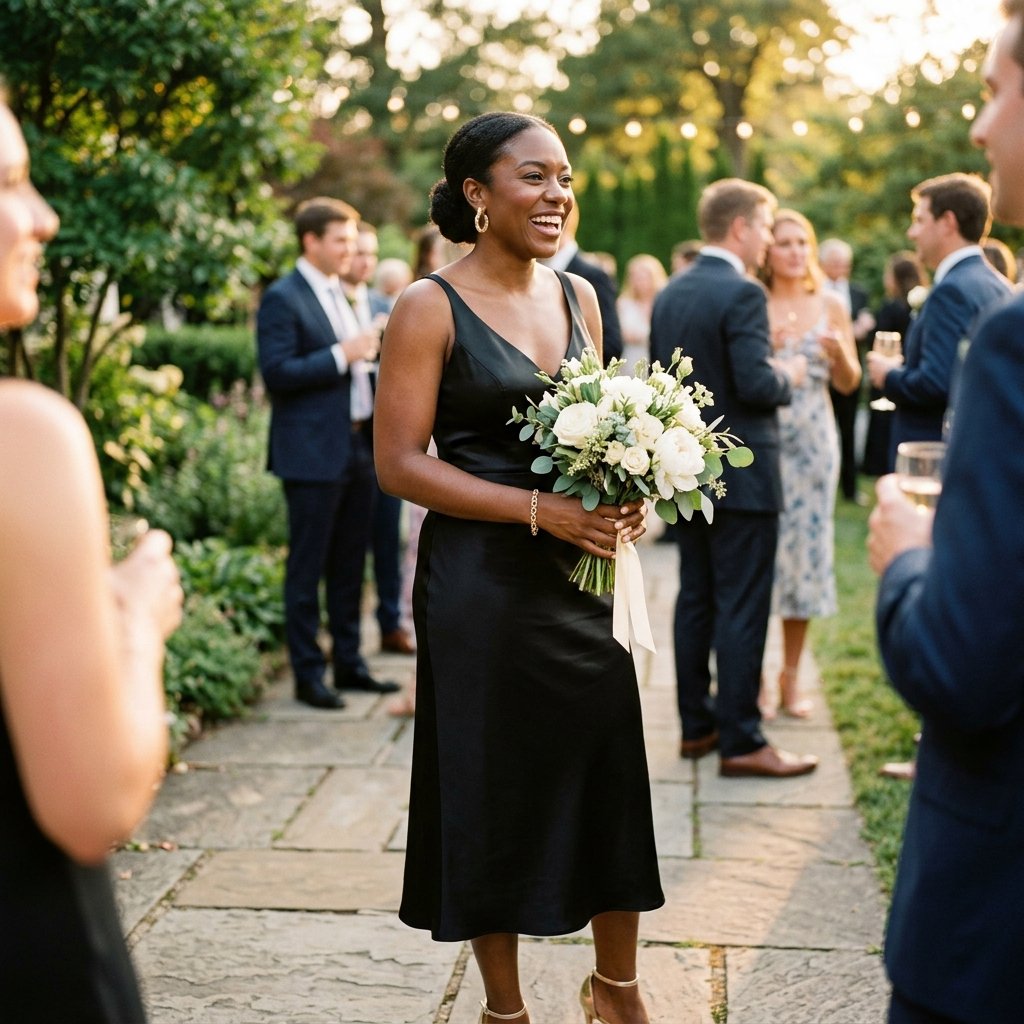
Accessories do more work with black dresses than they do with almost any other color.
They create focal points.
A pair of gold earrings, a delicate bracelet, or a metallic heel gives the eye somewhere to travel.
Without those small highlights, dark dresses can feel visually heavy.
That doesn’t mean piling on jewelry.
In my experience, one noticeable accessory usually works better than several competing pieces.
A little contrast goes a long way.
Frequently Asked Questions
Are black bridesmaid dresses still in style?
Absolutely.
If anything, they’ve become more popular because they feel timeless rather than trendy. They work across seasons and suit a wide range of wedding styles.
Do black bridesmaid dresses make weddings look too formal?
Not necessarily.
Fabric, venue, flowers, and styling influence the mood more than the color itself. A black satin dress at a vineyard wedding feels very different from a black velvet dress in a formal ballroom.
Should every bridesmaid wear the same dress?
Not always.
Different silhouettes in the same color often produce better results, especially when bridesmaids have different body types.
Do black bridesmaid dresses work for summer weddings?
Yes, but fabric matters.
Lightweight materials generally feel more comfortable than heavier options when temperatures rise.
What color flowers work best with black bridesmaid dresses?
White, blush, burgundy, and soft neutrals tend to create beautiful contrast. Very dark bouquets can sometimes disappear against the dresses.
After seeing black bridesmaid dresses succeed and fail at more weddings than I can count, I’ve become convinced the color was never the problem.
The bridal parties that look incredible in photos aren’t necessarily wearing expensive dresses or following every trend. They simply understand how black interacts with light, fabric, and movement.
If I were choosing a black bridesmaid dress tomorrow, I’d spend less time worrying about whether black is too dark and more time paying attention to texture, shape, and how the dress behaves when I walk across a room.
That’s usually where the best wedding photos begin.