
The first time I wore a white blazer dress, I expected compliments. What I didn’t expect was how differently people reacted compared to when I wore a traditional cocktail dress.
Women asked where I bought it. Men who normally wouldn’t notice fashion commented that it looked “sharp.” Even looking back at the photos, the outfit stood out in a way many occasion dresses don’t.
Since then, I’ve noticed something interesting. White blazer dresses have become one of the few fashion pieces that work across completely different settings. I’ve seen them at bridal showers, rooftop parties, engagement celebrations, fashion events, luxury hotels, and even destination dinners. Yet despite becoming more popular, they’re also one of the easiest outfits to get wrong.
The reason is simple.
Most women treat a white blazer dress like a dress.
In reality, it’s tailoring.
That’s a completely different category.
A cocktail dress relies on fabric, movement, and styling details. A white blazer dress relies on structure, proportions, and construction. That’s why some versions look effortlessly expensive while others end up looking like someone borrowed a long office blazer and added heels.
The color doesn’t help either. White has a way of exposing every weakness in a garment. Poor tailoring becomes obvious. Cheap fabric becomes obvious. Wrinkles become obvious. Even the smallest fit issues become easier to see.
Black hides mistakes.
White highlights them.
That’s why I think white blazer dresses are one of the best examples of how fashion isn’t really about trends. It’s about understanding why certain pieces work and others don’t.
Why Some White Blazer Dresses Look Designer and Others Look Cheap
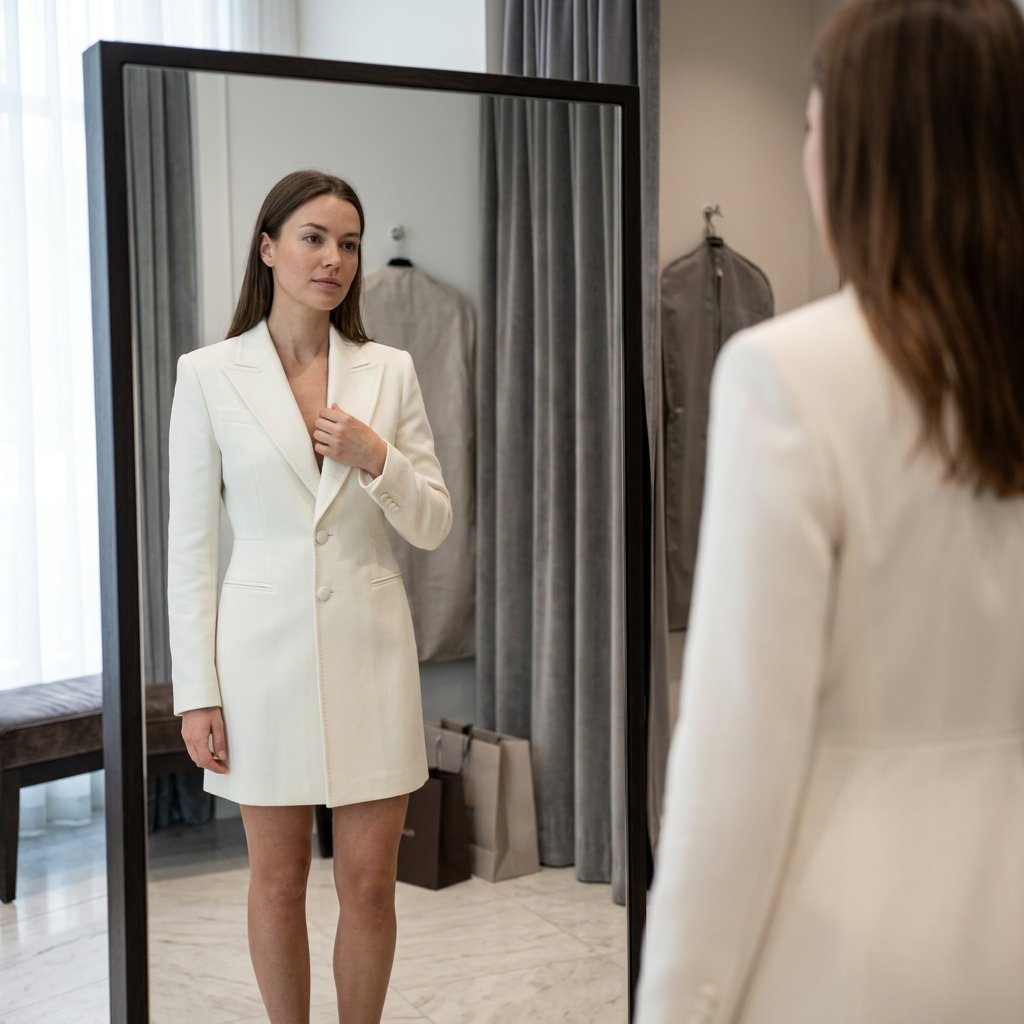
I’ve seen women spend hundreds on a white blazer dress only to end up looking less polished than someone wearing a much more affordable version.
That sounds unfair, but it’s surprisingly common.
The biggest factor isn’t the brand. It’s usually the fabric.
White fabric behaves differently from darker colors because it reflects light rather than absorbing it. When the material is too thin, every detail becomes visible. Pocket outlines, lining seams, wrinkles, and bunching all become easier to notice. What looked acceptable in a fitting room can suddenly look completely different outdoors or in photographs.
That’s one reason designer tailoring often looks better even before you notice the label. The fabric typically has enough weight to hold its shape.
Structure matters just as much.
The best white blazer dresses usually create a clear silhouette. The shoulders feel intentional. The waist has some definition. The skirt portion flows naturally rather than hanging awkwardly.
When those elements disappear, the outfit often starts looking unfinished.
I’ve also noticed that women tend to focus heavily on the front view and completely ignore the side profile. A white blazer dress can look fantastic standing still in front of a mirror but create bulk from the side when walking. That’s where construction becomes obvious.
Another overlooked factor is the shade of white itself.
Many shoppers automatically choose the brightest white available because it feels cleaner or more luxurious. In reality, softer whites and ivory tones often look richer. Bright optical white can sometimes appear harsh under sunlight and photography, while warmer whites create more depth.
The most expensive-looking white blazer dresses I’ve seen rarely rely on flashy details. They don’t need oversized buttons, dramatic cutouts, or excessive embellishment.
They rely on fit.
That’s usually the difference.
What Most Women Get Wrong About White Blazer Dresses
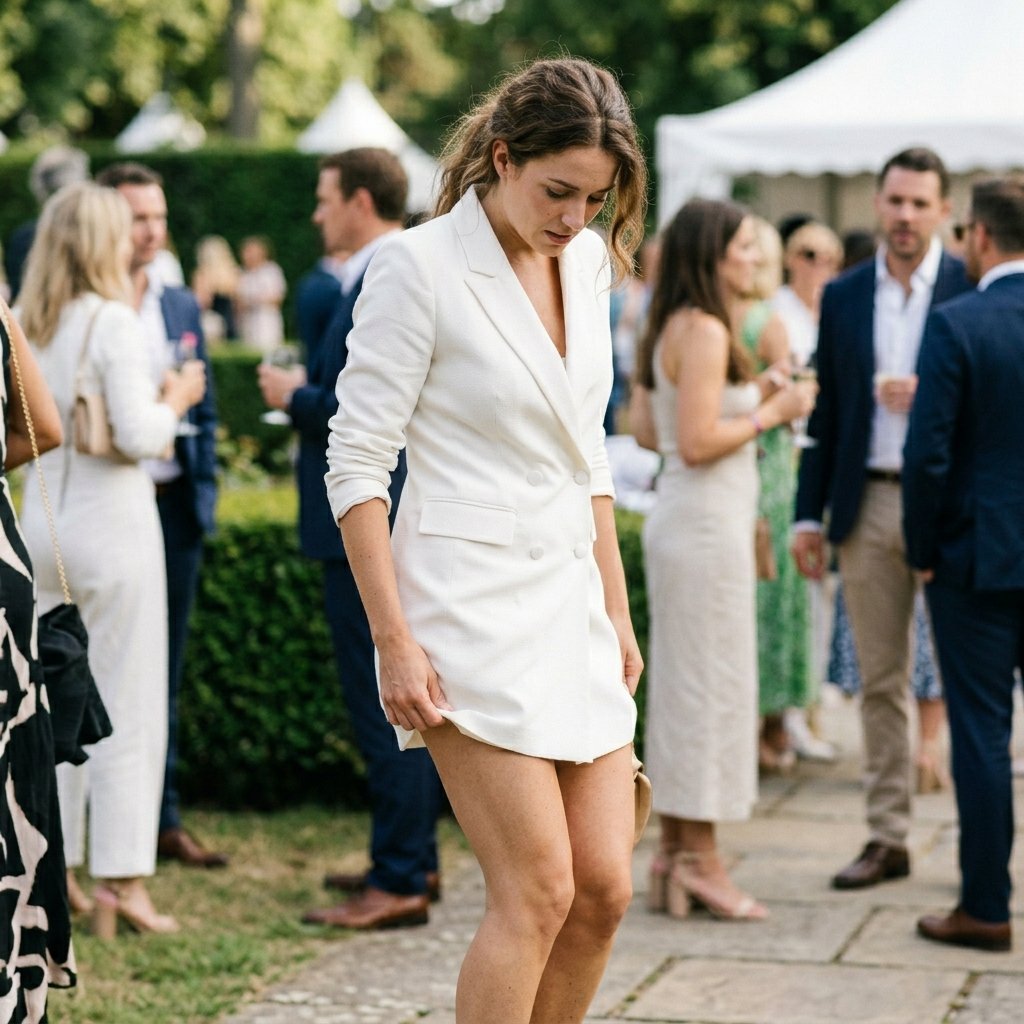
After seeing countless white blazer dresses at events over the years, I’ve noticed several mistakes appearing again and again.
The first is assuming that tighter automatically means better.
Many women buy blazer dresses that are too fitted because they worry structure will make them look boxy. The opposite often happens. Excessive tightness can pull against the buttons, distort the lapels, and create tension lines that immediately reduce the polished appearance.
Another common mistake is choosing a hemline that’s too short.
This sounds good in theory because blazer dresses already have a strong silhouette. Many women think a shorter hemline will make the outfit feel more youthful. In practice, it often removes the sophistication that makes the blazer dress appealing in the first place.
I also see women trying to compensate for a simple dress by adding too many statement elements.
For example:
- Oversized earrings
- Bold necklaces
- Bright handbags
- Dramatic shoes
- Heavy makeup
Individually, these items can work. Together, they often compete with the clean tailoring that should be the focus.
One mistake that rarely gets discussed is treating influencer photos as styling guides.
Many influencer outfits are designed for a single image. Real life is different.
You’ll be sitting, walking, eating, standing, and socializing. An outfit that looks amazing in one pose doesn’t always perform well during an actual event.
That’s why I pay more attention to movement than static photos.
A white blazer dress should look good while living in it, not just while posing in it.
White Blazer Dress vs Traditional Occasion Dresses

One reason white blazer dresses continue gaining popularity is that they solve a problem many women didn’t realize they had.
Traditional occasion dresses can sometimes feel predictable.
A white blazer dress offers something different.
| White Blazer Dress | Traditional Cocktail Dress |
|---|---|
| Structured appearance | Soft appearance |
| Tailoring-focused | Fabric-focused |
| Modern aesthetic | Classic aesthetic |
| Strong silhouette | More movement |
| Fashion-forward feel | Traditional event dressing |
| Works across multiple occasions | Often occasion-specific |
Neither option is necessarily better.
The decision usually depends on the impression you want to create.
A cocktail dress often feels romantic.
A blazer dress feels intentional.
That’s why I see more women choosing them for modern bridal events, fashion gatherings, and upscale social occasions.
Where White Blazer Dresses Actually Shine
One thing I’ve learned is that white blazer dresses don’t work equally well everywhere.
They thrive in environments that naturally complement their structured appearance.
Bridal showers are probably the easiest example. The white color feels appropriate, while the tailoring offers something more modern than a traditional white dress. I’ve attended several bridal events where the bride wore a blazer dress and looked far more current than someone following predictable bridal trends.
Engagement parties are another setting where they work beautifully. There’s enough formality to support the structured silhouette, but enough flexibility to avoid feeling overdressed.
Rooftop dinners might be my personal favorite environment for a white blazer dress. City skylines, evening light, and clean architecture seem to complement tailoring naturally. The outfit feels sophisticated without trying too hard.
I’ve also seen them work exceptionally well during destination events. Luxury resorts, beachside dinners, and hotel celebrations often provide the perfect balance between relaxed and polished.
Where they tend to struggle is at highly casual gatherings.
The structure that makes a blazer dress attractive can feel out of place at events where everyone else is dressed casually. Trying to force it into the wrong environment usually creates an awkward contrast.
The best outfits often feel connected to their surroundings.
White blazer dresses are no exception.
Why White Blazer Dresses Look Different on Different Women
One misconception I dislike is the idea that certain outfits only belong to specific body types.
What I’ve noticed instead is that proportions matter more than body categories.
A petite woman may need slightly different tailoring than a taller woman. A curvier silhouette may benefit from stronger waist definition. Women over 40 often gravitate toward longer hemlines and more refined construction.
But the underlying principle stays the same.
Balance.
The most successful white blazer dress outfits create balance between structure and ease.
I’ve seen petite women look incredible in blazer dresses because the proportions were adjusted correctly. I’ve seen curvier women wear them beautifully because the tailoring worked with their shape instead of fighting against it.
I’ve also seen women in their forties, fifties, and beyond wear white blazer dresses more successfully than women twenty years younger.
Confidence helps.
Good tailoring helps more.
Fashion conversations often focus heavily on body types, but I think proportions tell a more useful story.
Frequently Asked Questions
Are white blazer dresses still in style?
Yes. Unlike trend-driven pieces, white blazer dresses are built around tailoring, which tends to remain relevant regardless of seasonal trends.
Can you wear a white blazer dress to a wedding?
Guests should always consider the bride’s preferences. For bridal showers, engagement parties, rehearsal dinners, and civil ceremonies, white blazer dresses remain a popular choice.
What makes a white blazer dress look expensive?
Fabric quality, structure, fit, and proportion usually matter more than decorative details.
Are white blazer dresses flattering?
They can be very flattering when the tailoring creates shape and balance rather than simply adding structure.
Do white blazer dresses photograph well?
Yes. In fact, they often photograph exceptionally well because clean tailoring creates strong visual lines that stand out in images.
The more white blazer dresses I see, the more convinced I become that their appeal has very little to do with fashion trends. Trends usually succeed because they’re new. White blazer dresses succeed because they solve a problem.
They offer the polish of tailoring without the formality of a suit and the sophistication of occasionwear without relying on excessive decoration.
That’s a difficult balance to achieve, which is probably why the best ones stand out so easily. When the fit is right, the fabric has enough structure, and the proportions feel intentional, a white blazer dress doesn’t need much else to look impressive.